SALARSNET · COIN HISTORIES
Numerian Coins: A Brief Reign, Five Roman Lives
Numerian became Caesar in 282 and emperor after his father Carus died in 283; he died in 284. Institutional antoninianus comparisons show his radiate portrait under Carus and different reverses. They do not identify the mint, reverse or alloy of an individual offered coin.

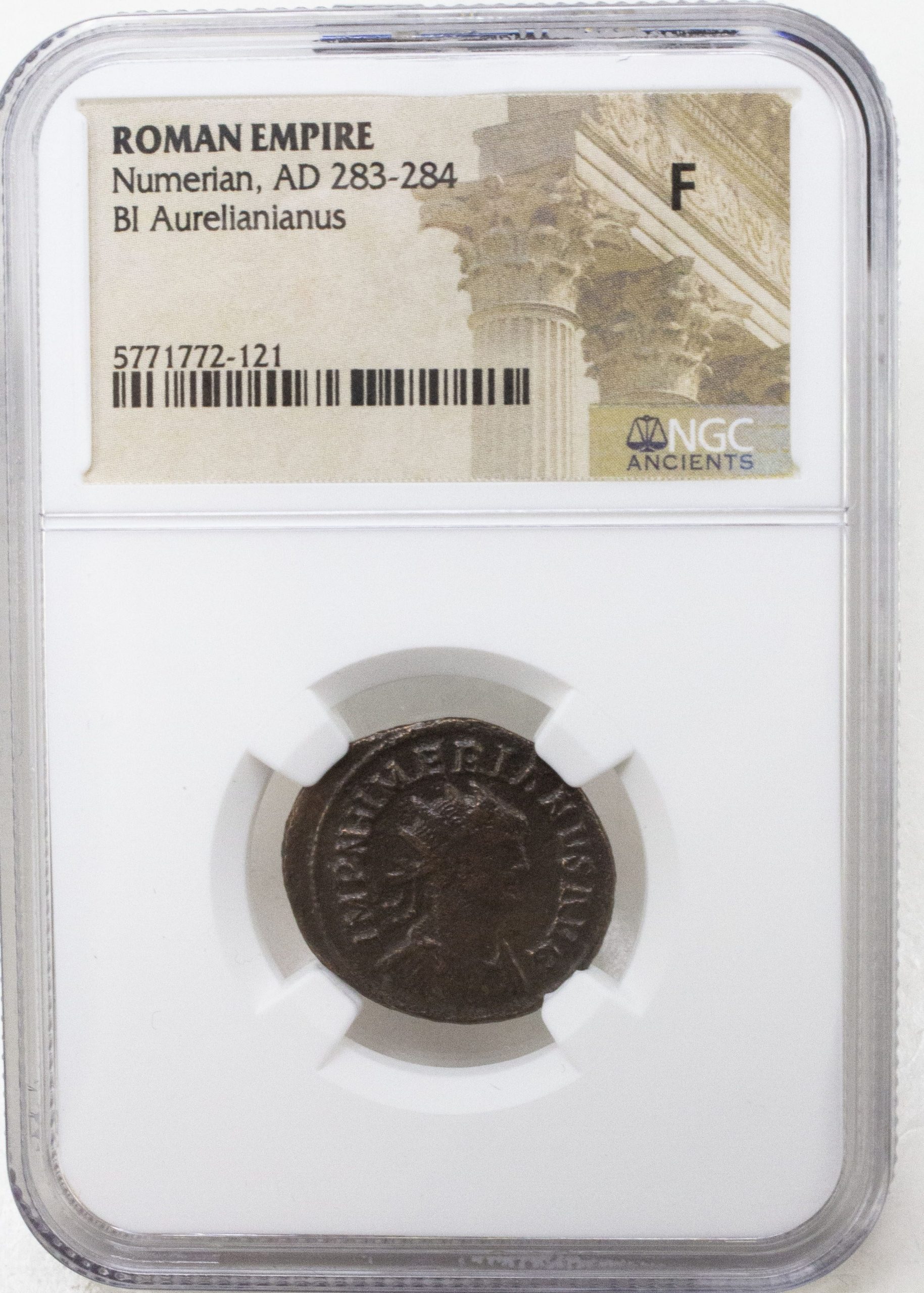
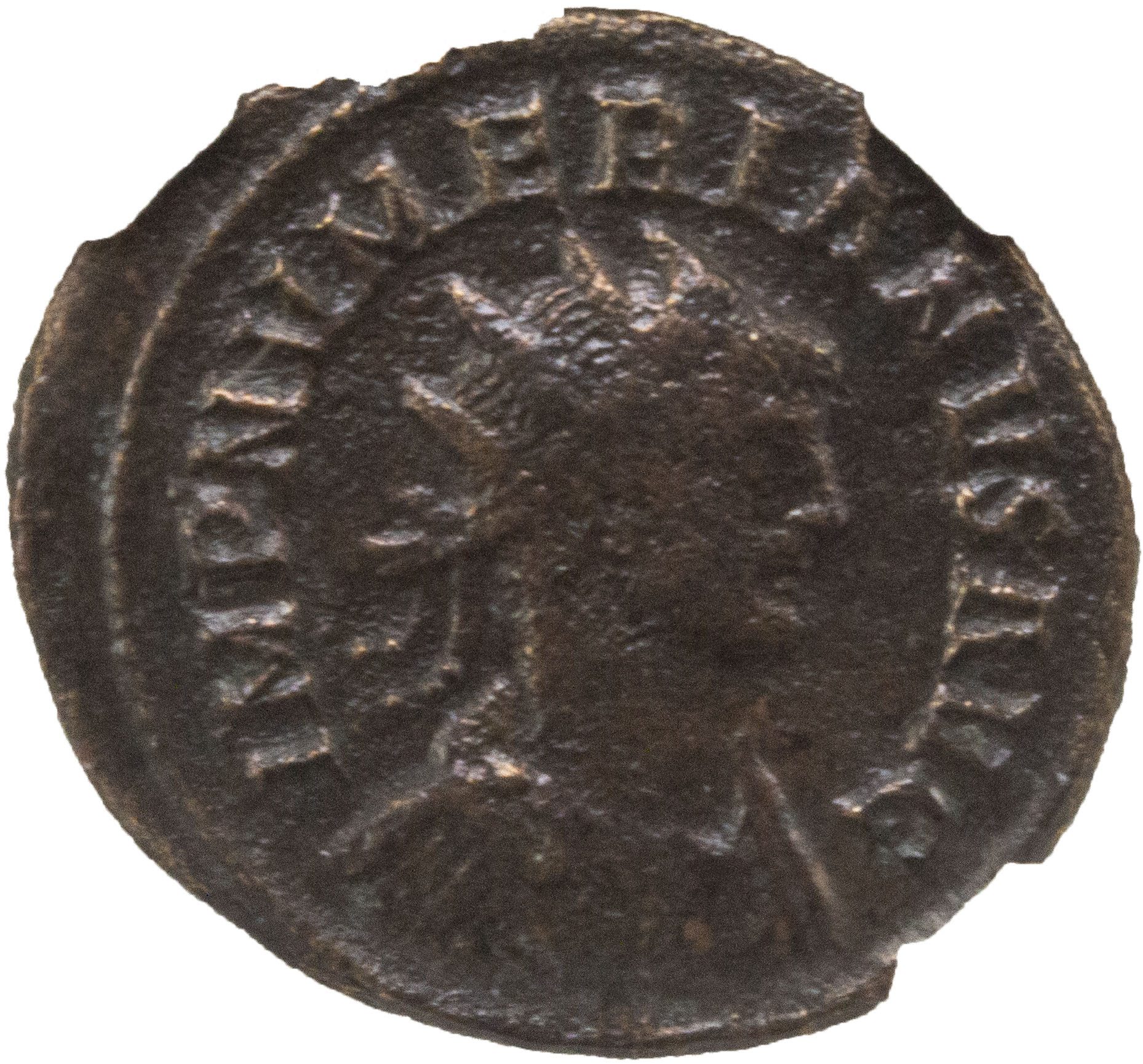
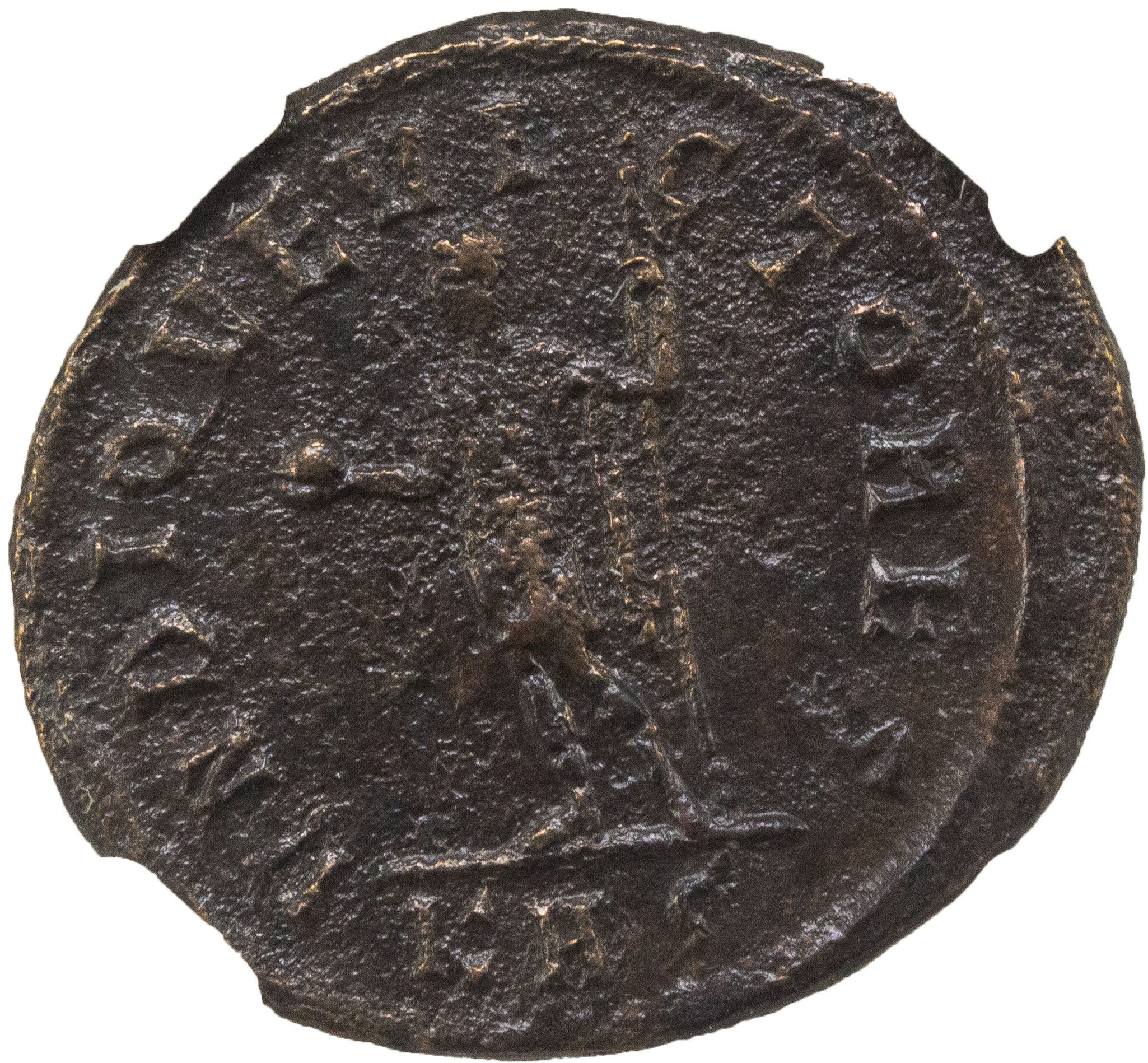
Coin facts at a glance
- Ruler
- Numerian; Roman Empire
- Junior rule
- Caesar from 282
- Imperial reign
- 283–284
- Coin comparisons
- RIC V Carus 353 and 356; portrait Numerian
- Supplier designation
- Billon antoninianus; no individual assay
- Individual provenance
- Not established
History of the coin
A son becomes emperor
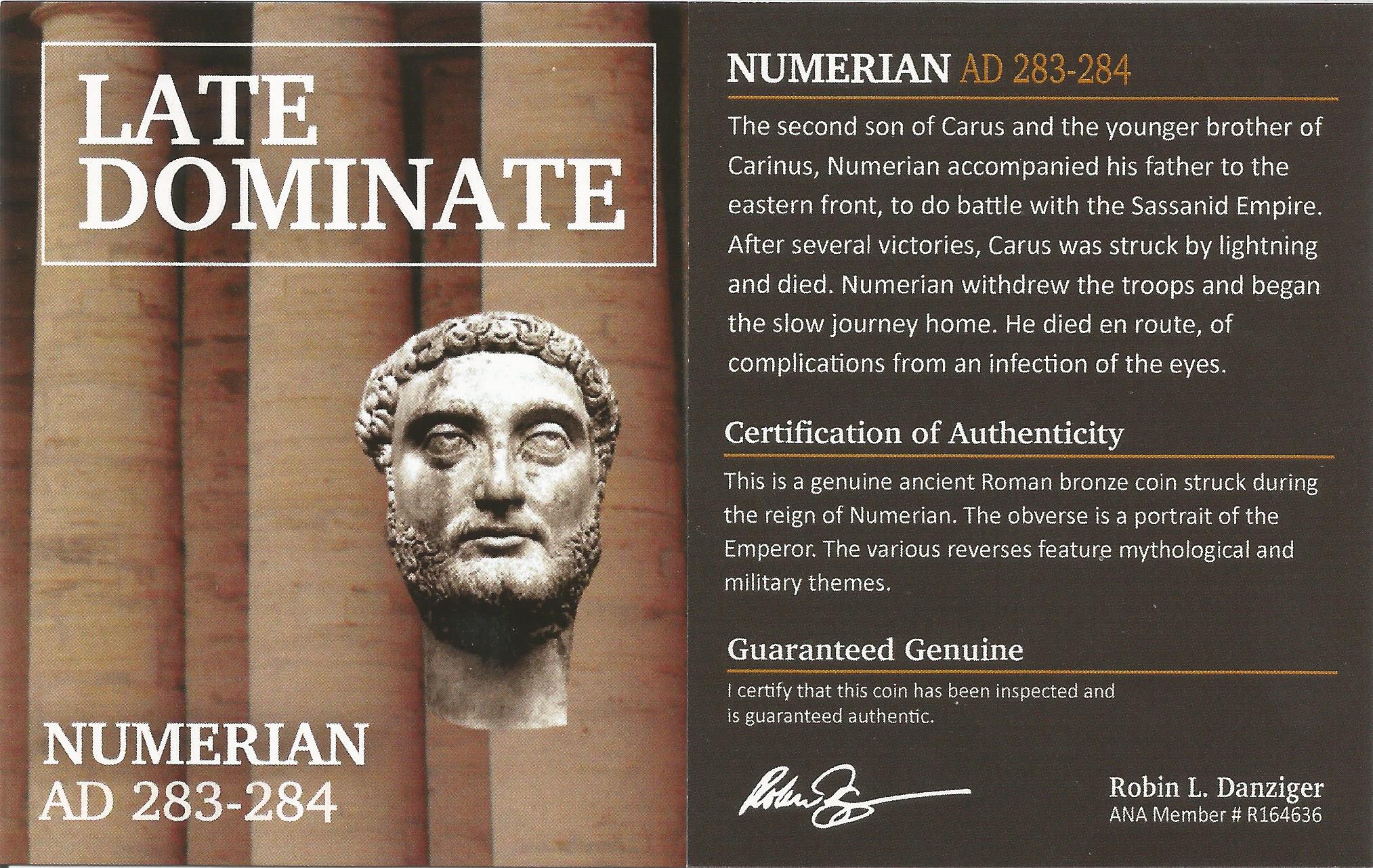
Numerian was the younger son of Emperor Carus and the brother of Carinus. William Leadbetter’s scholarly biography places his appointment as Caesar in the autumn of 282. Caesar here means a junior imperial ruler, not Julius Caesar. Numerian accompanied his father on the eastern campaign and became Augustus, or emperor, after Carus died in 283.
Numerian led the returning army and held the consulship with Carinus in 284. He died in November that year. The surviving accounts describe illness, a closed litter and the discovery of his body. Diocletian accused the officer Aper and killed him before being proclaimed emperor. Leadbetter favors illness as an explanation for Numerian’s death; that interpretation does not establish the cause beyond doubt. ECC’s claim that Carus and Numerian died together in one coup should not be treated as settled history.
References: William Leadbetter: Numerianus (283–284 A.D.); ECC: exact Numerian NGC F offering; ECC: exact Numerian NGC CH-F offering; ECC: exact Numerian NGC CH-VF offering; ECC: exact Numerian NGC VF offering; ECC: exact Numerian NGC XF offering.
Numerian’s portrait while Carus ruled
The American Numismatic Society’s Online Coins of the Roman Empire, or OCRE, records RIC V Carus 353 as an antoninianus of 282–283 from Lugdunum. RIC means Roman Imperial Coinage, a reference catalog. Although the catalog heading and issuing authority name Carus, the obverse portrait and inscription name Numerian. A catalog’s ruler grouping and the face shown on a coin need not be the same.
The portrait wears a radiate crown, with points like rays. The inscription is M AVR NVMERIANVS NOB C. On the reverse, MARS VICTOR accompanies Mars walking with a spear and trophy. This military image belongs to the catalogued comparison. It is not a verified description of every Numerian coin sold under one supplier order code.
References: ANS OCRE: RIC V Carus 353.
A second design, and what remains unverified
OCRE’s RIC V Carus 356 is another Numerian antoninianus dated 282–283, attributed to Lugdunum under Carus. Its reverse legend is PRINCIPI IVVENTVT. Numerian stands with a globe and sceptre, rather than the Mars design of the first comparison. The two records show why an emperor’s name alone cannot identify an individual coin’s reverse or catalog number.
Both catalog records use a Silver material field. ECC describes its offerings as billon. Neither label measures the silver content of the coins offered here. No exact alloy percentage, mint, reverse, issue date, individual measurements or earlier ownership is assigned without examining the available specimen. These early comparisons also do not prove that an offered coin was struck before Numerian became Augustus.
References: ANS OCRE: RIC V Carus 353; ANS OCRE: RIC V Carus 356; ECC: exact Numerian NGC F offering; ECC: exact Numerian NGC CH-F offering; ECC: exact Numerian NGC CH-VF offering; ECC: exact Numerian NGC VF offering; ECC: exact Numerian NGC XF offering.
The NGC F offering and its original fiction
This offering is one holdered coin with supplier designation F and order code NUMERIAN(BILLON-ANT)NGC. The supplier’s 45.3 g weight and 3.4 by 2.4 by 0.4 inch dimensions concern the holdered offering, not verified bare-coin measurements. Gallery photographs are representative. An optional box, printed story or additional certificate is not promised by this listing.
“Florus Takes the Long Way” is an original invented story set in the Roman world during Numerian’s imperial reign, 283–284. Its characters, dialogue, work, relationships, travel and payments are imagined. The story establishes no exact coin value, local circulation or connection to an offered specimen.
References: ECC: exact Numerian NGC F offering.
The NGC CH-F offering and its original fiction
This offering is one holdered coin with supplier designation CH-F and order code NUMERIAN(BILLON-ANT)NGC. The supplier’s 45.3 g weight and 3.4 by 2.4 by 0.4 inch dimensions concern the holdered offering, not verified bare-coin measurements. Gallery photographs are representative. An optional box, printed story or additional certificate is not promised by this listing.
“No Singing Before Supper” is an original invented story set in the Roman world during Numerian’s imperial reign, 283–284. Its characters, dialogue, work, relationships, travel and payments are imagined. The story establishes no exact coin value, local circulation or connection to an offered specimen.
References: ECC: exact Numerian NGC CH-F offering.
The NGC CH-VF offering and its original fiction
This offering is one holdered coin with supplier designation CH-VF and order code NUMERIAN(BILLON-ANT)NGC. The supplier’s 45.3 g weight and 3.4 by 2.4 by 0.4 inch dimensions concern the holdered offering, not verified bare-coin measurements. Gallery photographs are representative. An optional box, printed story or additional certificate is not promised by this listing.
“Bassa Against the Current” is an original invented story set in the Roman world during Numerian’s imperial reign, 283–284. Its characters, dialogue, work, relationships, travel and payments are imagined. The story establishes no exact coin value, local circulation or connection to an offered specimen.
References: ECC: exact Numerian NGC CH-VF offering.
The NGC VF offering and its original fiction
This offering is one holdered coin with supplier designation VF and order code NUMERIAN(BILLON-ANT)NGC. The supplier’s 45.3 g weight and 3.4 by 2.4 by 0.4 inch dimensions concern the holdered offering, not verified bare-coin measurements. Gallery photographs are representative. An optional box, printed story or additional certificate is not promised by this listing.
“Two Days to Answer” is an original invented story set in the Roman world during Numerian’s imperial reign, 283–284. Its characters, dialogue, work, relationships, travel and payments are imagined. The story establishes no exact coin value, local circulation or connection to an offered specimen.
References: ECC: exact Numerian NGC VF offering.
The NGC XF offering and its original fiction
This offering is one holdered coin with supplier designation XF and order code NUMERIAN(BILLON-ANT)NGC. The supplier’s 45.3 g weight and 3.4 by 2.4 by 0.4 inch dimensions concern the holdered offering, not verified bare-coin measurements. Gallery photographs are representative. An optional box, printed story or additional certificate is not promised by this listing.
“Junia's Blue Wall” is an original invented story set in the Roman world during Numerian’s imperial reign, 283–284. Its characters, dialogue, work, relationships, travel and payments are imagined. The story establishes no exact coin value, local circulation or connection to an offered specimen.
References: ECC: exact Numerian NGC XF offering.
Historical fiction inspired by this coin type
These stories imagine people and events around the coin type. They are separate from the documented history and do not describe the provenance of an offered specimen.
No Singing Before Supper
4 minute read · 784 words
“No Singing Before Supper” is original historical fiction set in an imagined Roman setting in AD 283–284. Every character, conversation and private event is invented. No exact payment value, local circulation, trade custom or provenance of the offered specimen is established.
I made one rule for the evening: no singing before supper. I hoped that afterward everyone would be too full to ask.
Severa arrived first, carrying olives and an opinion about my doorway.
“You've painted it.”
“Yes.”
“Very yellow.”
“That was the paint's opinion too.”
She touched the wood. Thirty years ago we had sung together at dinners, weddings, and whatever gathering could afford us. She remembered every missed note. I remembered every time she had blamed a missed note on the room.
Now she sold vegetables with her husband. I had stopped performing. When people asked why, I said I was tired of late nights. That was true enough to say easily.
My voice had become thin. Sometimes it broke halfway through a line. I could still talk, quarrel, and call across the street. I could not trust myself to hold the long notes that had once made strangers stop eating.
Severa had asked whether she could bring two old friends to supper. I said yes because I wanted to see them. Then I spent three days wishing I had said something else.
The others came with bread. I had bought wine and fish. A coin bearing Numerian's name had gone to the wine seller that morning. I remembered its little face while I counted what remained. My grand reunion would cost me several quiet evenings afterward.
I wanted it to be worth that.
We ate beneath the open roof of my courtyard. Dusk turned the yellow door soft and pleasant. Severa conceded that it looked better from a distance.
At first we talked about children, sore knees, and who had moved away. Then Orestes reminded us of the wedding where a dog had stolen the roast.
“It was a very good dog,” I said. “It waited until we were paid.”
The laughter felt familiar. I leaned back. For a little while I forgot the rule.
Then Severa tapped the table with her fingers. It was the opening beat of a song we had known for years.
I reached for the wine jug.
“We haven't finished eating.”
“My plate is empty.”
“Have more fish.”
She watched me. Orestes began the first line, very badly. He had always sung as though louder meant nearer the right note.
I joined him before I could stop myself.
For two lines, my voice behaved. I knew where to breathe. My hands moved with the words. I saw Severa smiling across the table, and I tried to sing the long phrase as I used to.
The sound broke.
I coughed, although I had no need to cough. Orestes kept going. Then he noticed nobody was following and stopped.
“Dry throat,” I said.
Severa pushed the jug toward me. She did not say it would help.
I drank. The wine tasted sourer than it had a moment before.
“We can do another,” Orestes said.
“No.”
The word came out hard. He lowered his eyes to the bread.
I had invited them to my house and made them afraid to speak. That was worse than a broken note, but I did not know how to mend it.
Severa stood and carried the empty fish dish inside. I followed her, grateful for a task. She set it down and turned toward me.
“How long?”
“A while.”
“Does it hurt?”
“No.”
“Then why didn't you tell me?”
I picked at a bit of fish stuck to the dish. “You remember how I sounded.”
“Of course I do.”
“That is why.”
She said nothing. Through the doorway I heard Orestes asking our other guest whether he should leave. I wanted to walk into the courtyard and apologize. I also wanted Severa to tell me that my voice was perfectly fine.
She did neither thing for me.
“I came to have supper with you,” she said at last. “I can hear singers elsewhere.”
It was a plain statement. I had made an elaborate trap of this evening, and she had walked around it.
I left the empty dish inside. We went back to the table together. I told Orestes that I was sorry.
“My voice won't do what it used to. I should have said so.”
He nodded, looking relieved. Then he said, “Mine never did.”
We laughed. This time I did not hurry to prove I was enjoying myself.
Later Severa sang alone. I listened without joining her. She missed a note in the second verse and made a face at me.
“Bad room,” I said.
“Terrible room.”
They stayed until the lamp burned low. At the door, Orestes asked whether we could meet again the next month.
“Bring supper,” I told him.
“And a song?”
“If you must. But learn the words.”
Documented and imagined
Numerian’s titles and chronology, with uncertainty about his death, and the independent institutional coin comparisons are documented above. The people and events of “No Singing Before Supper” are imagined. This is not the biography or ownership history of an offered coin.
Bassa Against the Current
4 minute read · 793 words
“Bassa Against the Current” is original historical fiction set in an imagined Roman setting in AD 283–284. Every character, conversation and private event is invented. No exact payment value, local circulation, trade custom or provenance of the offered specimen is established.
At sunrise Bassa had the fastest ferry on the river. By midday she had the second fastest, and everybody seemed eager to tell her.
The new boatman was named Cato. He was young, broad in the shoulders, and pleased with both facts. His ferry was narrower than hers. He drove it across the shallow water with a long pole, then called out his arrival as though the far bank had been waiting for news.
Bassa had worked this crossing for eleven years. She knew where the stones lay and how the current changed after rain. She had never needed to shout when she arrived. People could see her.
That morning they were watching him instead.
By her third crossing she had begun counting his trips. He had made four. She pressed harder on her pole, and her boat slipped past his on the way back.
“Good speed,” he called.
She disliked his surprise more than she would have disliked an insult.
On the bank, a woman waited with a small boy. They carried no heavy bags. Bassa took them aboard and pushed off at once.
Halfway across, the boy stood to look at a bird. His mother caught his arm. Bassa turned to tell him to sit, and her pole struck a buried stone. The jolt made her shoulder ache.
Cato passed on her left.
The boy watched him go. “Will he get there first?”
“Yes,” Bassa said.
“Why?”
“Because this is not a race.”
She heard how sharp she sounded. His mother drew him close. Bassa eased her grip on the pole and took them the rest of the way without speaking.
After they left, she sat on the landing. Her shoulder hurt when she raised her arm. Cato came over carrying a piece of bread.
“Want half?”
“No.”
He sat a little way from her and ate it all. This annoyed her too.
“Your boat turns well,” she said at last.
“It's light.”
“It will move about with a heavy load.”
“I know.”
She had been ready to explain. He had not asked her to.
A man arrived carrying a bag and a rolled cloak. He looked toward the far bank, where a cart stood on the road above the landing.
“Can you get me over before that leaves?”
Cato jumped up. Bassa rose more slowly.
“I can take you now,” Cato said.
The man looked at both boats. Cato's had water around the edge of its floor. Bassa's was wider and sat more steadily against the landing.
“I'll go with her.”
Bassa felt a warm, foolish pleasure. She helped him aboard and took the coin he offered. Numerian's name curved around the portrait. She put it away and reached for her pole.
Behind her, Cato began preparing for another crossing. She knew he would try to pass.
The cart driver on the far bank climbed onto his seat.
“Hurry,” the passenger said.
Bassa pushed hard. Pain ran from her shoulder into her neck. She could force another stroke. She had done harder work than this. Then she saw the low branch ahead, where the current drew floating wood toward the bank.
The direct course would take her beneath it. When the river was lower, she used that way. Today she would have to duck and keep the passenger down while driving the boat.
She turned outward.
“The cart,” he said.
“I see it.”
“Then why are we going this way?”
“That branch. We need room.”
He looked behind her. Cato's ferry moved toward the same opening, carrying a woman with a basket. He turned outward too.
Bassa stopped watching him.
She set the pole, pushed, and waited until the boat settled before the next stroke. Her passenger stood to wave at the driver. She asked him to sit. He sat, but kept waving from the bench.
The cart left before they reached the landing.
The man stared after it. Bassa tied up her boat.
“I asked you to hurry.”
“Yes.”
“You should have said I might miss it.”
She could have blamed the branch, the current, or his choice of boat. Instead she said, “I should have.”
He took his bag and went up the road to ask when the next cart would leave. He did not thank her. She let him go without asking for it.
Cato arrived behind her. He tied his ferry alongside and lifted out the woman's basket.
“Bad luck about the cart,” he said.
Bassa rolled her aching shoulder. “We need to tell people we can't catch everything they point at.”
He nodded. “Will you tell them, or shall I?”
“Take turns.”
They rested while the woman walked away. For the first time that day, Bassa did not count how many crossings he had made.
Documented and imagined
Numerian’s titles and chronology, with uncertainty about his death, and the independent institutional coin comparisons are documented above. The people and events of “Bassa Against the Current” are imagined. This is not the biography or ownership history of an offered coin.
Florus Takes the Long Way
4 minute read · 792 words
“Florus Takes the Long Way” is original historical fiction set in an imagined Roman setting in AD 283–284. Every character, conversation and private event is invented. No exact payment value, local circulation, trade custom or provenance of the offered specimen is established.
The mule walked into the bathhouse before Florus could explain that it was not his mule.
It was not his bathhouse either. Both facts seemed important, but the man at the door wanted him to stop talking and start pulling.
Florus pulled. The mule planted its feet beside a basket of clean sandals. A wet man stepped around it, wearing nothing but an expression of deep offense.
“Does it have an appointment?” he asked.
Florus had worked at his aunt's stable for six weeks. Until that morning, his main duty had been carrying water. Now she had trusted him to take a hired mule back to its owner across town. He had imagined arriving with a straight back and being mistaken for the person in charge.
Instead he was holding a rope that led into a room full of steam.
The animal's owner had warned him about carts. Florus had taken a quiet lane to avoid them. He had not been warned about bathhouses. When a door opened, the mule simply chose it.
“Bring something it wants,” the attendant said.
“What does it want?”
“Apparently a bath.”
Florus dug into his pouch. He had a few coins for his midday food. One showed Numerian's face. He had no food yet, which seemed a serious fault in his planning.
Outside, a woman was selling apples from a basket. He offered a coin and chose the smallest apple.
“For you?” she asked.
“For somebody stubborn.”
“Get a larger one.”
He did. When he returned, the mule was licking moisture from the wall. Florus held the apple before its nose. It followed him out, took the apple, and stopped again.
Across the lane stood a cart loaded with empty jars. The mule stared at it.
Florus could pull. He could wait. He could lead the animal all the way back and admit that one cart had defeated him. His aunt was expecting him to return before the water jars needed filling.
He asked the cart's driver to move.
“I'm waiting for my brother.”
“How long?”
“Until he comes.”
The apple seller laughed. Florus wished he had bought his apple elsewhere.
“There is another way,” she said. “Behind the bathhouse. It comes out near the little square.”
He thanked her and led the mule down a narrow passage. For several steps it went willingly. He began to feel useful again.
Then the passage ended at stairs.
The mule stopped. Florus stopped. At the top, a girl carrying a bundle looked down at them.
“Are you bringing it up?”
“No,” he said, with more certainty than he had felt all morning.
Turning the animal took so long that the apple seller was waiting when he came out. She had brought her basket with her.
“You found the stairs, then.”
“You could have mentioned them.”
“I thought you were only taking her around to the yard. I should have asked where you meant to go.”
“I know the part with my aunt in it.”
The woman stopped smiling. “Which stable?”
He told her.
“Your aunt used to deliver to my father. She knows my brother too.” She pointed at the driver. “He is still waiting.”
Florus looked at the cart, then at its empty jars. They made a sharp rattle whenever the driver shifted on his seat.
“Could you put a cloth between those?” Florus asked.
The driver frowned. “Why?”
“So they don't knock together. Perhaps that's what she dislikes.”
He had remembered the stable's old mare, which shied when somebody dropped a bucket. A cart was a large thing to fear, but the noise might be smaller.
The apple seller folded her shawl and tucked it among the nearest jars. Her brother steadied the load.
Florus led the mule forward. It raised its head. He kept the rope loose and walked beside its shoulder. The jars stayed quiet. They passed the cart.
He did not cheer. He feared that cheering would undo everything.
The woman retrieved her shawl. “You can find the rest?”
“Yes. I think so.”
At the owner's door, Florus admitted that he was late. He also explained the jars. The owner listened, then rubbed the mule between its ears.
“I should have told you about the noise.”
Florus had prepared three excuses. With no need for them, he felt suddenly tired.
When he reached the stable, his aunt pointed toward the water jars.
“Did you stop for food?”
“No.”
“Then eat first.”
He sat beside her bread and told the whole journey, including the bathhouse. She laughed so hard that he had to finish the story twice.
The next morning she handed him two buckets.
“Take the short way,” she said.
Florus lifted them. “Does it have stairs?”
“Only if you've moved the well.”
Documented and imagined
Numerian’s titles and chronology, with uncertainty about his death, and the independent institutional coin comparisons are documented above. The people and events of “Florus Takes the Long Way” are imagined. This is not the biography or ownership history of an offered coin.
Two Days to Answer
4 minute read · 803 words
“Two Days to Answer” is original historical fiction set in an imagined Roman setting in AD 283–284. Every character, conversation and private event is invented. No exact payment value, local circulation, trade custom or provenance of the offered specimen is established.
First day
To Sabinus, from your former tent companion, Marcellus.
You said I could write if I ever needed a favor. I have kept that promise of yours for twelve years. Now I am using it.
I want you to come to the harbor and meet my son when his ship arrives. His name is Victor. He will be carrying a brown bag with a mended strap. He believes that I shall be there.
I cannot go. My right leg has swollen again, and walking to the well yesterday left me awake all night. I could hire a cart, but I would spend the money he needs for the next part of his journey. He is going to work with my sister inland. You need only take him to the lodging house beside the harbor and give him the coins in the packet I will send tomorrow, if you agree.
There is one with Numerian's portrait among them. I have counted those coins three times. I am telling you this so you will know that nothing is missing if the coins look fewer than you expect.
Do not tell Victor about the leg. Say that I was called away.
That is the favor. I know it is a large one after so long.
I remember the day you left our tent. I remember telling you that your family could wait. You had heard that your father was ill and wanted to ask for leave. I called you a coward because I was afraid of being left with men I did not know.
I have not written before because I could never find a good beginning. Now I have found a bad one: I need something.
You may refuse. The boy carrying this can wait for your answer.
Marcellus
Second day
Sabinus,
Your answer arrived before sunset. The boy stood while I read it, so I had to pay him before I could read it again.
You will meet Victor. You will not tell him that I was called away. You said that after twelve years I was asking you to stand beside another man's son and lie about why his father was absent.
I was angry when I read that. I was angrier because I understood it.
I thought I was sparing Victor worry. He has never been far from home, and he was so proud of making this journey alone. When I promised to meet him, the leg was better. I hoped it would stay better if I spoke of it as though it had.
Yesterday I tried to rise from the bench without using my hands. I fell against the table. I had meant to prove that I could reach the harbor. Instead I proved that I needed help even to stand. I broke a cup finding that out.
My neighbor came when she heard the noise. She swept up the pieces while I told her about your answer. She asked why Victor was old enough to sail alone but not old enough to hear that his father needed to sit down.
I said she did not know him. She said perhaps I did not know him as well as I thought.
She has known him since he was born. It was difficult to continue arguing.
I am sending a second letter in the packet. Please give it to him before you give him the money. In it I have explained the leg. I have said that I cannot travel and that this is not his fault. I have asked him to visit if he can leave the harbor without missing the onward cart. If he cannot, I have asked him to write from my sister's house.
I have also told him who you are. He knows the stories about the winter when our tent leaked. I had left out the part about your father. Now I have put that in.
I am sorry for what I said then. Your father needed you. My fear did not make your choice wrong. You asked me to speak honestly to my son; I ought to speak honestly to you too.
I will not ask you to visit me. Not in this letter. It would be too easy to turn an apology into a second favor.
You asked one question at the end of your answer: do I still snore?
Yes. My neighbor says the whole street knows when I have fallen asleep. I believe this is a complaint rather than a question, but she repeats it often.
The boy says he must leave now or miss you before you go to the harbor. I have given him bread. He asked for cheese too. He is learning the size of my need.
Thank you for meeting Victor. Thank you for refusing the rest.
Marcellus
Documented and imagined
Numerian’s titles and chronology, with uncertainty about his death, and the independent institutional coin comparisons are documented above. The people and events of “Two Days to Answer” are imagined. This is not the biography or ownership history of an offered coin.
Junia's Blue Wall
4 minute read · 777 words
“Junia's Blue Wall” is original historical fiction set in an imagined Roman setting in AD 283–284. Every character, conversation and private event is invented. No exact payment value, local circulation, trade custom or provenance of the offered specimen is established.
For forty years Junia had lived with other people's walls. Now she wanted a blue one.
Her room was small, but it was hers. She had saved for it while working in a large household, where she woke when someone rang a bell and slept when the last task was done. The family had kept their rooms pale. They said pale walls looked clean.
Junia knew how much work that appearance required.
She bought her own room when the household moved away. It stood above a baker's shop, with one window and a narrow stair. She had a bed, a table, and enough money left to hire a painter for the wall beside the window.
When he arrived, she told him she wanted blue from floor to ceiling.
“Like the sea?” he asked.
“I have not seen the sea.”
“Like the sky, then.”
“I want to see the color before I decide what it is like.”
His name was Felix. He brought a little board with patches of color on it. Junia held it near the window. She chose the deepest blue.
Felix rubbed his chin. “The room will feel smaller.”
“It is already small.”
“I could paint a border. Leave the middle pale.”
“I have had enough pale.”
He shrugged and began moving the table. Junia helped him cover the bed. She liked him better when he worked without advising her.
The baker's wife, Livia, came up before midday. She carried a loaf and looked at the first patch on the wall.
“Oh.”
Junia knew that kind of oh. She had heard it when a dish was broken, when a visitor arrived too early, and when a servant wore something too fine.
“It is blue,” she said.
“I can see.” Livia set the bread down. “Will all of it be that color?”
“Yes.”
“You'll need a lamp even in the afternoon.”
Junia looked at Felix. He had stopped mixing the paint.
“I mentioned a border,” he said.
Livia nodded. “That would be pleasant.”
For a moment Junia wanted to agree. Livia had been kind when she moved in. She had carried hot water up the stairs and shown her which step had a loose edge. Junia did not want her new neighbor to think her difficult.
Felix lifted his brush. “Shall I stop here?”
The small blue patch sat alone on the pale wall. It looked like something that needed permission to grow.
“No,” Junia said. “Carry on.”
Livia picked up the cloth covering the chair and shook it straight. “Well. It is your room.”
Junia wished she had sounded pleased about that.
After Livia went down, Felix painted in silence. Junia took her purse from beneath the mattress to count his payment. One coin bore Numerian's face. She set it with the others on the covered table.
“Did I offend her?” she asked.
“I can't tell you.”
“You agreed with her.”
“I suggested a border before she came.”
That was true. He had not changed sides. Junia had made sides where there were only people with different tastes.
By late afternoon the wall was finished. In the fading light the blue looked darker than the patch on the board. Junia sat on her bed and studied it.
Felix packed his brushes.
“Now you think I was right,” he said.
“No. I'm deciding where to put the table.”
She tried it against the blue wall. Then she moved it back near the window. Felix waited by the door, holding his payment.
“Do you need help?”
“I need to try.”
He smiled and left her to it.
Junia carried the chair across the room three times. At last she set it beside the window, facing the wall rather than the street. The loaf was still on the table. She broke it and ate while the room grew dim.
The blue had changed again. It was no longer bright. She could live with that. Tomorrow it would be different in the morning light.
A knock came from the stairs. Livia stood outside with two cups.
“My husband says I should have asked whether you liked it.”
“I do.”
“May I look again?”
Junia stepped aside. Livia put the cups on the table and sat on the bed. She studied the wall for a while.
“Not for my room,” she said.
“No,” Junia agreed.
“But I can see why you wanted it.”
Junia fetched the wine jug. Livia had brought only cups, which Junia thought was a hopeful choice.
They drank with the window open. Below them, the baker called for his wife. She leaned out and told him where she was.
Junia kept her chair facing the blue.
Documented and imagined
Numerian’s titles and chronology, with uncertainty about his death, and the independent institutional coin comparisons are documented above. The people and events of “Junia's Blue Wall” are imagined. This is not the biography or ownership history of an offered coin.
Historical references and product evidence
- William Leadbetter: Numerianus (283–284 A.D.) ↗
Full scholarly biography read in Chrome 2026-10-11. Caesar 282, Augustus after Carus’s death 283, death November 284. Distinguish surviving narrative, author’s illness interpretation and uncertain personality/death claims.
- ANS OCRE: RIC V Carus 353 ↗
Full institutional type record read in Chrome 2026-10-11: authority Carus, portrait Numerian, antoninianus 282–283, Lugdunum, Silver field, radiate bust, MARS VICTOR, Mars with spear/trophy. Comparison only, not offered specimen.
- ANS OCRE: RIC V Carus 356 ↗
Full institutional type record read in Chrome 2026-10-11: authority Carus, portrait Numerian, antoninianus 282–283, Lugdunum, Silver field, PRINCIPI IVVENTVT, Numerian with globe/sceptre. Comparison only, no specimen attribution or assay.
- ECC: exact Numerian NGC CH-F offering ↗
Authenticated exact page and public Store search checked 2026-10-11: NUMERIAN(BILLON-ANT)NGC, CH-F, 3 available at observation, 3 representative gallery views. Historical managed identity and each/1 unit record dated 2026-10-05; no current revision asserted.45.3 g and 3.4×2.4×0.4 inch entries describe holdered offering, not bare coin. Optional box separate.
- ECC: exact Numerian NGC CH-VF offering ↗
Authenticated exact page and public Store search checked 2026-10-11: NUMERIAN(BILLON-ANT)NGC, CH-VF, 1 available at observation, 2 representative gallery views. Historical managed identity and each/1 unit record dated 2026-10-05; no current revision asserted.45.3 g and 3.4×2.4×0.4 inch entries describe holdered offering, not bare coin. Optional box separate.
- ECC: exact Numerian NGC F offering ↗
Authenticated exact page and public Store search checked 2026-10-11: NUMERIAN(BILLON-ANT)NGC, F, 15 available at observation, 5 representative gallery views. Historical managed identity and each/1 unit record dated 2026-10-05; no current revision asserted.45.3 g and 3.4×2.4×0.4 inch entries describe holdered offering, not bare coin. Optional box separate.
- ECC: exact Numerian NGC VF offering ↗
Authenticated exact page and public Store search checked 2026-10-11: NUMERIAN(BILLON-ANT)NGC, VF, 11 available at observation, 4 representative gallery views. Historical managed identity and each/1 unit record dated 2026-10-05; no current revision asserted.45.3 g and 3.4×2.4×0.4 inch entries describe holdered offering, not bare coin. Optional box separate.
- ECC: exact Numerian NGC XF offering ↗
Authenticated exact page and public Store search checked 2026-10-11: NUMERIAN(BILLON-ANT)NGC, XF, 1 available at observation, 4 representative gallery views. Historical managed identity and each/1 unit record dated 2026-10-05; no current revision asserted.45.3 g and 3.4×2.4×0.4 inch entries describe holdered offering, not bare coin. Optional box separate.
Sources distinguish institutional and independent type research from supplier evidence about a particular offering. Research dates do not establish current inventory.