SALARSNET · COIN HISTORIES
Tacitus Antoninianus: A Short Reign and Three Stories
Emperor Tacitus ruled in 275–276. Institutional antoninianus comparisons show his radiate portrait and different reverses, including Aequitas with scales and Tacitus receiving a globe from Jupiter. These catalog records do not identify the mint, design or silver content of an individual offered specimen.
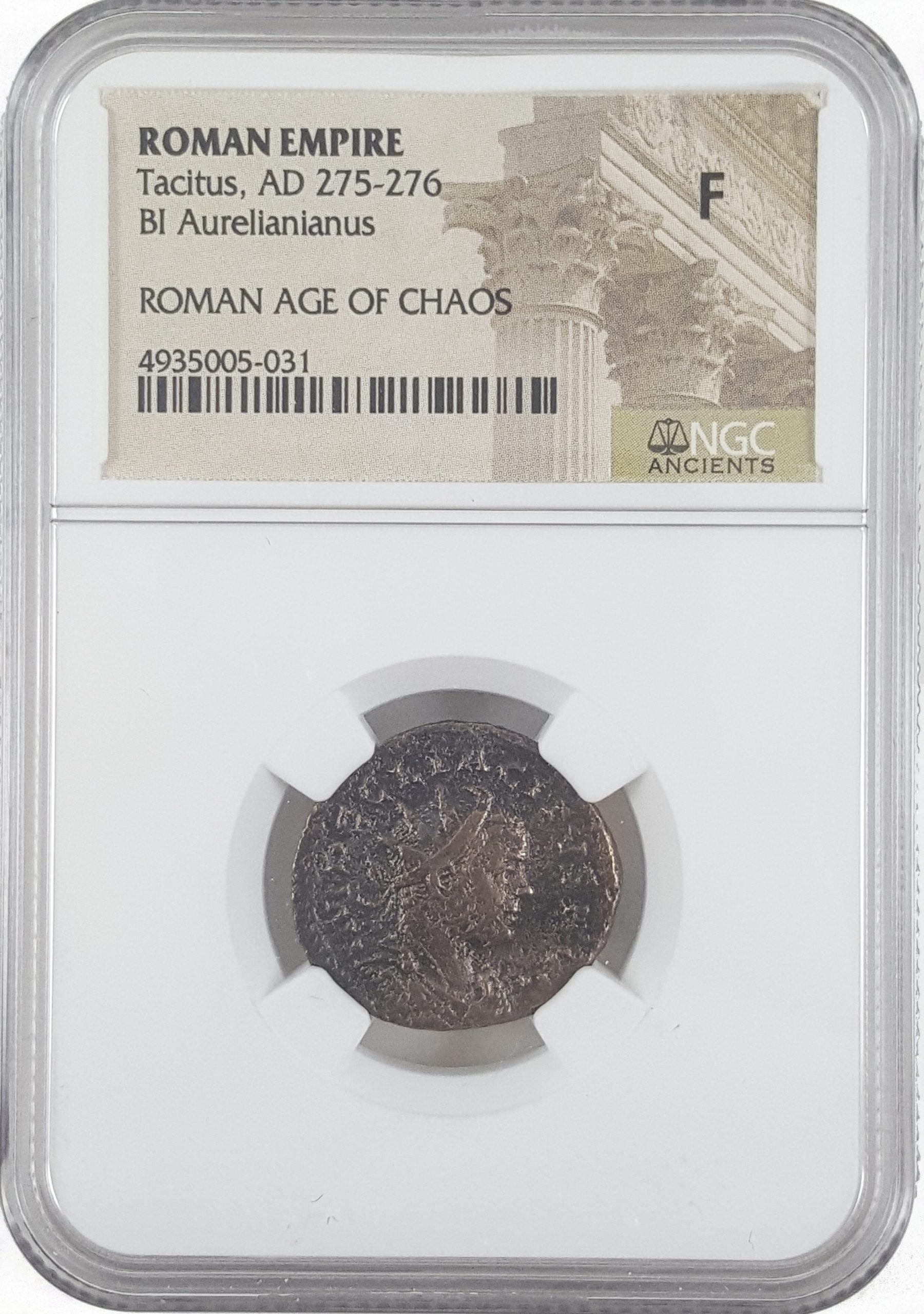

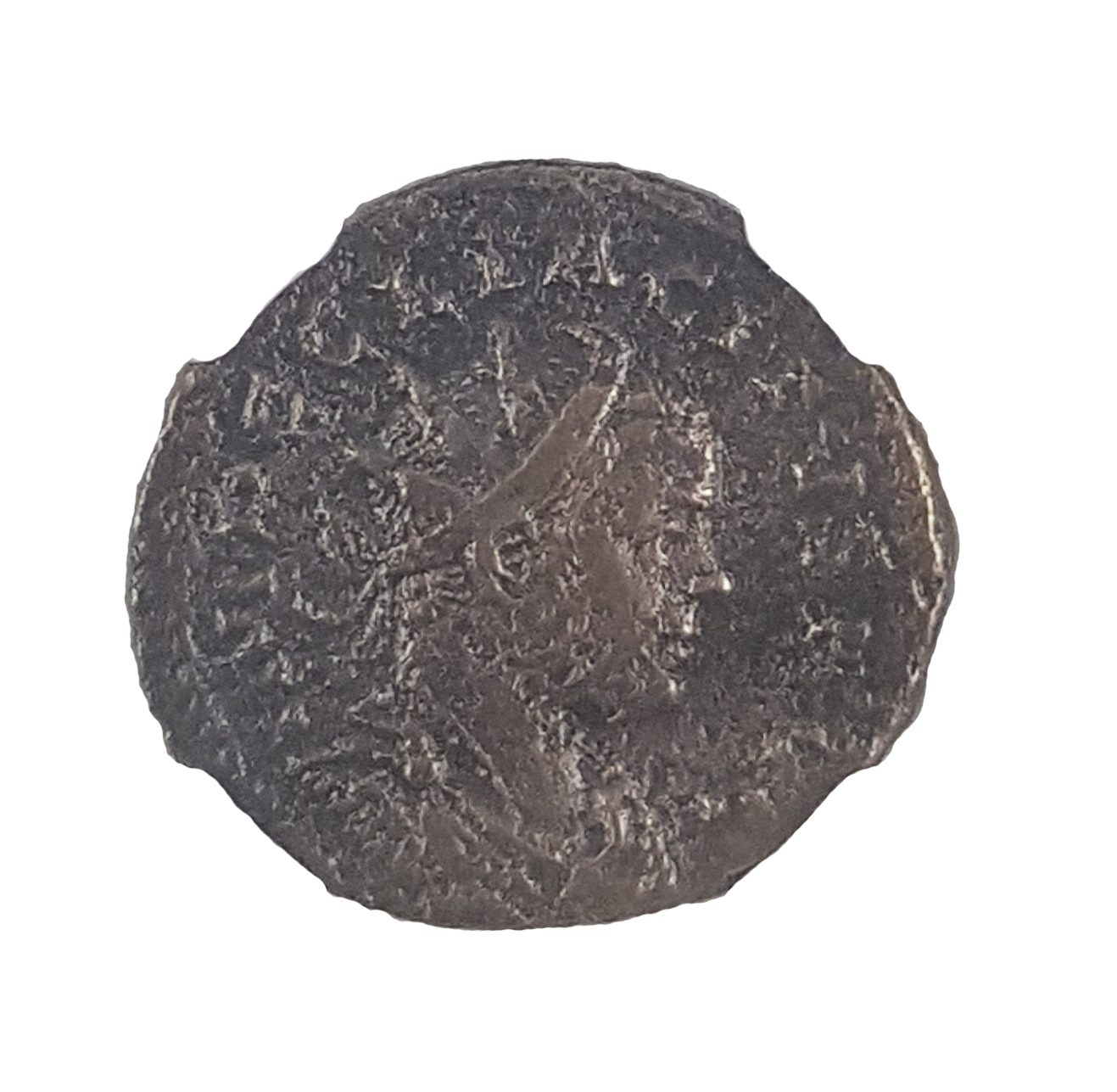
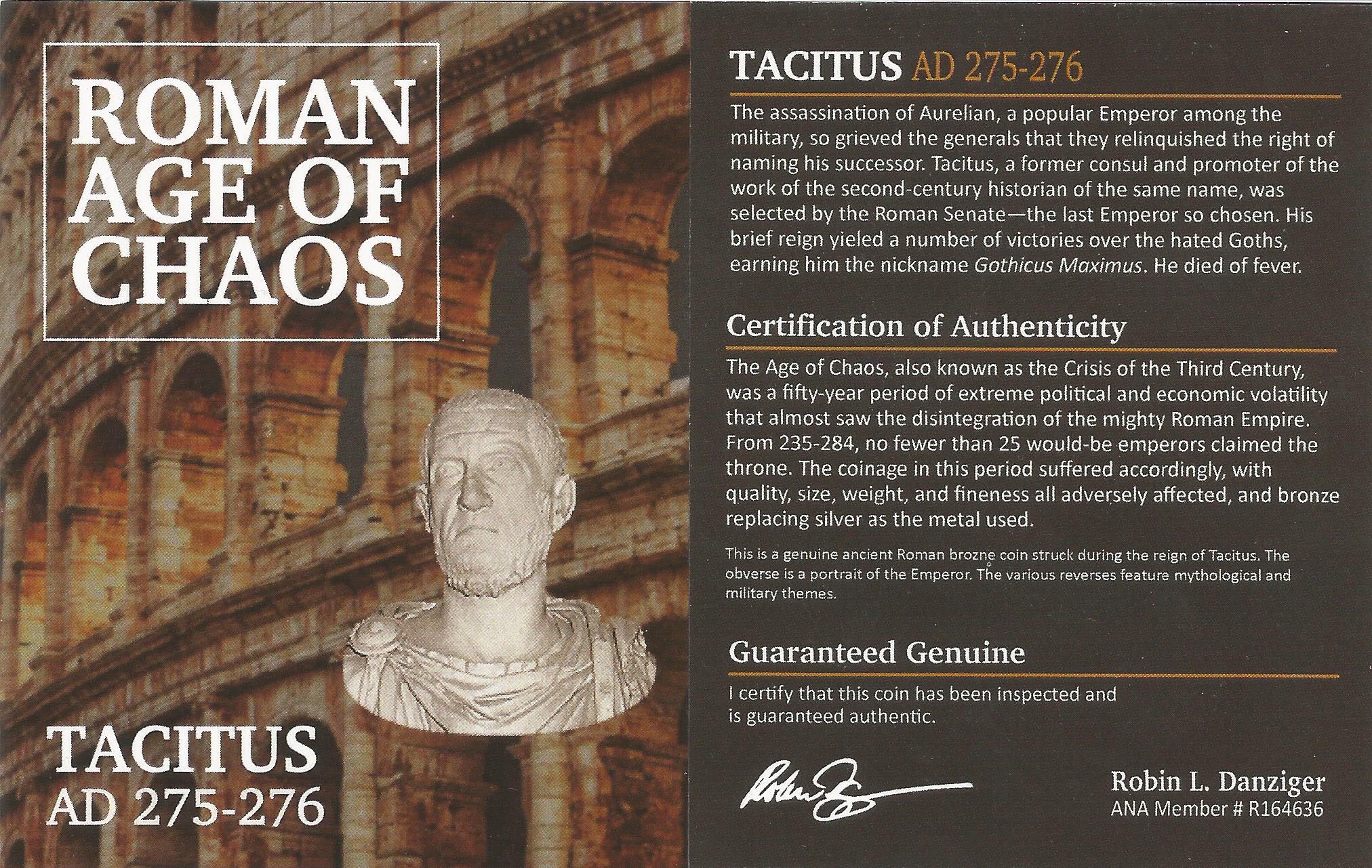
Coin facts at a glance
- Ruler
- Marcus Claudius Tacitus
- Reign
- 275–276
- Coin comparisons
- RIC V Tacitus 14 and 16
- Portrait
- Radiate crown
- Supplier metal designation
- Billon; no individual assay
- Individual provenance
- Not established
History of the coin
A short reign, with gaps in the record
Marcus Claudius Tacitus ruled the Roman Empire in 275–276. He was an emperor, not the historian Tacitus. Robin Mc Mahon’s scholarly biography finds little secure evidence about his earlier career beyond a consulship in 273.
After Aurelian’s murder, the army probably selected Tacitus late in 275, followed by confirmation in the Senate. Mc Mahon questions the later account of a long gap without an emperor and a restored Senate choosing the ruler. Claims of descent from the historian are also uncertain. Tacitus died in June 276; the surviving accounts disagree about illness or murder. The supplier’s plague explanation should not be treated as settled history.
References: Robin Mc Mahon: Tacitus (275–276 A.D.).
A pointed crown and the image of fairness
The American Numismatic Society’s Online Coins of the Roman Empire records RIC V Tacitus 14 as an antoninianus dated 275–276. RIC, or Roman Imperial Coinage, is a reference catalog. The portrait faces right and wears a radiate crown, with points like rays, along with clothing and armor. Its inscription names Tacitus as emperor.
The reverse reads AEQVITAS AVG. Aequitas stands with scales and a cornucopia, a horn of plenty. The human figure gives fairness a visible form. The image can express an ideal of just dealing without proving how any real sale was conducted. This catalog entry is an independent comparison; it does not identify the reverse on an unexamined coin offered today.
References: ANS OCRE: RIC V Tacitus 14.
Another reverse, and the limits of a comparison
OCRE’s RIC V Tacitus 16 records another antoninianus of 275–276. On its reverse, Tacitus holds a spear and receives a globe from Jupiter, who holds a sceptre. The legend is CONSERVAT MILIT. A different design on a coin of the same ruler is a reminder to read an actual specimen before assigning a catalog number.
Both OCRE entries use a Silver material field and leave the mint uncertain, within the region labeled Gallia. ECC describes its offerings as billon, an alloy containing silver and a base metal. A catalog’s material field is not an assay of these offered coins. Neither comparison establishes their silver percentage, mint, exact issue, reverse, measurements or earlier owners.
References: ANS OCRE: RIC V Tacitus 14; ANS OCRE: RIC V Tacitus 16; ECC: exact Tacitus NGC F offering; ECC: exact Tacitus NGC CH-VF offering; ECC: exact Tacitus NGC VF offering.
The F offering and its imagined market
This offering is one holdered coin with supplier designation F. ECC uses the TACITUS(BILLON-ANT)NGC order code. Its 44.1 g and 3.4 by 2.4 by 0.4 inch entries describe the holdered offering, not verified bare-coin measurements. An optional box is separate and is not promised by this Store listing.
“The Smaller Weight” imagines a fig seller, her son and a buyer facing dishonest measures during Tacitus’s reign. The characters, places, work, payments and events are invented. The fictional coin draws on independent portrait or reverse comparisons; no circulation history or link to the offered specimen is established.
References: ECC: exact Tacitus NGC F offering.
The CH-VF offering and its imagined inn
This offering is one holdered coin with supplier designation CH-VF. ECC uses the TACITUS(BILLON-ANT)NGC order code. Its 44.1 g and 3.4 by 2.4 by 0.4 inch entries describe the holdered offering, not verified bare-coin measurements. An optional box is separate and is not promised by this Store listing.
“The Empty Bench” imagines an innkeeper who tries to impress a guest while overlooking her brother’s need for supper and a seat during Tacitus’s reign. The characters, places, work, payments and events are invented. The fictional coin draws on independent portrait or reverse comparisons; no circulation history or link to the offered specimen is established.
References: ECC: exact Tacitus NGC CH-VF offering.
The VF offering and its imagined journey
This offering is one holdered coin with supplier designation VF. ECC uses the TACITUS(BILLON-ANT)NGC order code. Its 44.1 g and 3.4 by 2.4 by 0.4 inch entries describe the holdered offering, not verified bare-coin measurements. An optional box is separate and is not promised by this Store listing.
“The High Road” imagines two trading partners choosing between a dangerous recovery and an honest account of lost cloth during Tacitus’s reign. The characters, places, work, payments and events are invented. The fictional coin draws on independent portrait or reverse comparisons; no circulation history or link to the offered specimen is established.
References: ECC: exact Tacitus NGC VF offering.
Historical fiction inspired by this coin type
These stories imagine people and events around the coin type. They are separate from the documented history and do not describe the provenance of an offered specimen.
The Empty Bench
4 minute read · 727 words
“The Empty Bench” is original fiction set in an imagined Roman setting during Tacitus’s reign in AD 275–276. All characters, dialogue and private events are invented. No documented market rule, inn custom, road incident, coin value, local circulation or provenance of the offered specimen is established.
Bera wiped the bench twice before she let the guest sit down.
Her brother Pollio had just come in with a basket of wood. He lowered it, looked at the bench and began to sit.
“Not there,” she whispered.
He stood again. One twig remained caught in his hair.
The guest wore a clean blue cloak and had a ring on his hand. His boots were dusty, but the rest of him looked as though roads kept themselves tidy for him. He set a purse on the table. When he loosened it, Bera saw a coin bearing the name of Tacitus beside an emperor's crowned head.
“How many people are coming?” she asked.
“Just me.”
“You can have that whole bench.”
“I don't need the whole—”
“Pollio, move the wood.”
Her brother lifted the basket again. He carried it into the kitchen with the careful, slow steps of someone trying not to say anything.
The guest sat at one end of the bench. He looked at the empty space beside him, then at Bera.
“Could I have supper?”
“Of course. The best supper in this street.”
“Something plain would suit me.”
“Plain,” she repeated, as though considering a foreign word.
In the kitchen, Pollio sat on the little stool, eating barley and onions from a bowl in his lap. There was more in the pot, but Bera suddenly thought it looked dull.
“We have eggs,” she said.
“We had eggs. You sold them to the woman with the red basket.”
“One must have rolled behind something.”
“They don't hide when they're sold.”
She checked anyway. Behind the basket she found a spoon, an old sandal strap and the rag she had been looking for since morning. No eggs.
“Perhaps a sauce,” she said.
“Perhaps his plain supper.”
Bera took the pot from the fire and stirred it. The onions smelled good. They had smelled good ten breaths earlier, before the clean blue cloak arrived.
She chose the largest bowl. It had a chip in the rim. She chose a smaller one, then changed her mind and chose the largest again, turning the chip toward herself.
Pollio watched her.
“If you turn it enough times, will it mend?”
“Eat your supper.”
“I was trying to.”
She filled the bowl and cut bread. Then she decided the guest should have another bowl for his bread, a third for olives and a little dish for salt. The table was small. So was the tray.
She fitted everything onto it.
At the doorway, the salt dish slid toward the edge. Bera caught it with her thumb. The olive bowl tipped against the bread. She stopped moving and stood very still.
“Pollio.”
He came to the door.
“Take this one.”
“Which one?”
“The one that's moving.”
He took the olives and set them on the guest’s table. She put down the tray on the kitchen shelf and carried the supper in two journeys. Nothing broke. Somehow that made her feel more foolish.
The guest waited until she had finished arranging the dishes.
“This smells excellent,” he said. “But is there somewhere for your brother to sit?”
“He has a stool.”
“Does he like it?”
From the kitchen came a scraping sound. The stool had one leg shorter than the others. Pollio steadied it with his foot whenever he raised his spoon.
Bera looked at the broad empty bench.
“You wanted quiet,” she said to the guest.
“I wanted food. You've both been very busy keeping me company.”
She laughed once, in surprise. He smiled and broke his bread.
“What is your name?” she asked.
“Gaius. I sell cloth. Today I've walked farther than I intended, and I want to sit still for a little while.”
There was no grand party following him. No important news. No reason the whole bench had to remain empty.
Bera went back to her brother.
“Will you bring your bowl to the table?”
“Is the bench still too fine for me?”
“No.”
He took a spoonful before answering.
“And will you ask me to get up again?”
“Not tonight.”
“Then yes.”
He sat at the other end. Gaius pushed the olive bowl between them. Pollio set his own bread beside it. The twig fell from his hair onto the table.
Bera picked it up.
“More onions?” she asked.
“Please,” said Pollio.
She brought them to him first.
Documented and imagined
Tacitus’s short reign and institutional coin comparisons are documented, with historical uncertainties retained. The characters, dialogue and private events in “The Empty Bench” are imagined. The fiction does not establish an offered coin’s earlier owners or use.
The Smaller Weight
4 minute read · 751 words
“The Smaller Weight” is original fiction set in an imagined Roman setting during Tacitus’s reign in AD 275–276. All characters, dialogue and private events are invented. No documented market rule, inn custom, road incident, coin value, local circulation or provenance of the offered specimen is established.
Celsa kept the chipped side of the stone weight toward herself.
Her son Arrus had noticed. All morning he had been looking from the weight to her hands, then away again. He was sixteen and still believed she could tell what he was thinking. Today she could.
“Open the next basket,” she told him.
They sold dried figs beneath a cloth stretched between two poles. The figs were good. Celsa tested one from every basket, although Arrus said she chose that work for herself because it was the nicest.
He lifted the lid. She brushed dust from the scales.
Vera arrived with her usual little bowl. She bought from them every few days and never accepted the fruit at the bottom without looking at it.
“These are smaller,” Vera said.
“They're sweeter.”
“You always say that when they're smaller.”
Celsa smiled and tipped figs onto the pan. On the other side she set the stone. When the pans balanced, she poured the fruit into Vera's bowl.
Vera looked at it.
“That used to come higher.”
“Your bowl hasn't grown, has it?”
“No. Has your weight shrunk?”
Arrus stopped lifting the basket.
Celsa held out her hand for payment. Vera laid several coins on the table. One bore the name of Tacitus around a pointed crown. Its other side showed a small standing figure with scales.
Celsa gathered the coins too quickly. One fell and rolled beneath the stool.
“I'll find it,” Arrus said.
“You'll stay with the figs.”
Vera watched them both.
Across the lane, a man selling onions called out to his helper. A donkey shook its harness. Celsa wished Vera would leave. She knew the old woman liked to talk, but this morning she seemed to enjoy standing still.
“May I see the stone?” Vera asked.
“It broke when the table fell.”
“Turn it over, please.”
Celsa turned the chipped edge outward. Arrus looked at the ground.
“I can add a handful,” she said.
“For me?”
“Yes.”
“And the others?”
“There's nothing wrong with the figs.”
“No,” Vera said. “There's something wrong with how much you give us.”
Celsa felt heat rise into her face. She had cut the chip herself two evenings before, with a small hammer and a metal point. There had been no fallen table. She needed money for the stall, and the missing pieces of fruit had seemed too small for anyone to notice.
She had counted on that.
“Mother,” Arrus said quietly.
“Not now.”
He took the stone and set it on his open palm.
“Will you teach me to do this?”
She looked up at him.
He wasn't making a speech. His face was pale. He had been watching her hands since he was small, first because they could mend anything, then because they could make a sale. Next year he wanted to run one end of the table himself.
“No,” she said.
“Then we need another weight.”
She could still tell him to be quiet. Vera was only one buyer. By midday the lane would be full, and most people would hurry away with their figs.
Celsa laid the coins back on the table.
“I cut it,” she said. “It didn't break in a fall.”
Vera folded her arms. She gave Celsa no help at all.
“Arrus, ask the onion seller to lend us his weight. Ask him to come with it.”
Her son went across the lane. Celsa stood beside the open basket until he returned with the man and a weight of the same full measure as hers had been. The difference was small. It was also plain when they weighed Vera's portion again.
Celsa filled the missing part. Then she added more from the basket.
“Will that do?”
“For my bowl,” Vera said.
Celsa nodded. She called to a woman passing with a child.
“You bought figs from me this morning. Bring them back a moment. I gave you too few.”
The woman stopped. The onion seller raised his eyebrows. Celsa repeated herself, more loudly.
By noon she had returned enough fruit to empty a basket she had expected to sell. She would have to speak to the man who rented her the space. She would have to tell him why she was short.
Vera stayed to watch two more weighings before she left.
When the lane grew quiet, Arrus found the fallen coin under the stool. He put it beside the borrowed weight and reached for another fig basket.
Celsa took the other handle. They lifted it together.
Documented and imagined
Tacitus’s short reign and institutional coin comparisons are documented, with historical uncertainties retained. The characters, dialogue and private events in “The Smaller Weight” are imagined. The fiction does not establish an offered coin’s earlier owners or use.
The High Road
4 minute read · 817 words
“The High Road” is original fiction set in an imagined Roman setting during Tacitus’s reign in AD 275–276. All characters, dialogue and private events are invented. No documented market rule, inn custom, road incident, coin value, local circulation or provenance of the offered specimen is established.
Pavo had promised the cloth before dark. He had promised it yesterday too, while the rain beat against the roof and his partner Mira told him to look outside.
Now they stood where the road divided. One branch led down to the river crossing. The other climbed past the orchard and went around the hill.
“The high road,” Mira said.
“It adds hours.”
“So does swimming after our cart.”
Pavo walked to the water's edge. The ford was brown and fast. He could see the top of a stone he usually stepped on; the rest was gone.
He came back without speaking. Mira turned the little cart toward the hill.
They had two wrapped cloth bundles, a rope, a knife and enough food for the day. The food bag hung from Pavo’s shoulder, separate from the cart. In his purse Pavo carried coins for the journey, including one with Tacitus's name and a pointed crown. None could make the road shorter.
For the first part of the climb, Mira pushed while Pavo pulled. Mud sucked at their sandals. Water ran down the center of the road and gathered in every wheel mark.
They stopped beside a low stone wall.
“We should carry the bundles from here,” Mira said.
Pavo leaned against the cart. Each bundle was heavier than it looked. They had carried them once when a wheel broke, and his shoulders had hurt for days.
“The top is just there.” He pointed around the next bend. “We'll rest on level ground.”
“You can't see level ground from here.”
He could not. He had seen this road before the rain, which was not quite the same thing.
Still, he brought out the rope. They could both pull for the last stretch, one on each side. He tied its middle to the cart's front bar and gave Mira one end. She made a sliding loop for a grip, keeping her other hand free for the wall.
Pavo pulled on the right. Mira walked on the left, between the cart and the stones. There was room for her there, though not much. Beyond the right edge, the ground dropped toward the orchard.
For a while the cart followed them. Then the right wheel slipped sideways into a wet rut.
“Stop,” Mira said.
Pavo stopped pulling. He put his foot against the wheel, but mud slid beneath his heel. The cart swung toward the low edge.
Mira's loop tightened around her wrist. She had been holding it with her hand through the middle. As the cart turned, the rope pulled her away from the wall.
“Let go!” Pavo shouted.
“I can't.”
She was braced against a stone, trying to keep her feet. The loop was drawn tight. Pavo could see it biting into her sleeve.
He caught the front bar. For one moment he stopped the cart. The cloth was dry inside its wrapping. They had spent weeks earning enough to buy it. If he could turn the wheel out of the rut—
“Pavo!”
Mira had lost one sandal. Her bare foot slid, and her other hand scraped along the wall.
He reached for the knife at his belt. It caught against his wet tunic. He dragged it free, let the bar turn, and cut her side of the rope.
The cart lurched. Mira fell against the wall instead of following it.
Pavo grabbed her sleeve. Below them came the crack of wood and a long scrape through leaves.
For several breaths they stayed where they were. Then Mira pulled her hand free of the loose rope. A red band circled her wrist.
“Can you move your fingers?” he asked.
She moved them. She was shaking.
He looked down the slope. The cart lay on its side against an orchard tree. One bundle had burst open. Pale cloth spread over black mud.
“We could climb down,” he said.
Mira looked at him.
“Not now,” he added. “When it's dry. With help.”
She sat on the wall and took off her remaining sandal. Pavo found the other beside a wheel mark. He brought it back and knelt to fasten its loose strap.
“I should have listened,” he said.
“Yes.”
He nodded. There was no better answer.
They ate beside the wall. Afterward they walked uphill without the cart. Pavo carried their food and the cut length of rope. Mira chose each place to put her feet.
A small shelter stood beyond the bend, where road workers sometimes left tools. It had a dry corner. They would spend the night there and go to the buyer in the morning, with the truth instead of the cloth.
At the doorway Pavo started to say he would make the loss right.
He stopped. He had already promised enough.
“Where do you want to sit?” he asked.
Mira pointed to the dry corner. He set their bag there and left room beside it for her.
Documented and imagined
Tacitus’s short reign and institutional coin comparisons are documented, with historical uncertainties retained. The characters, dialogue and private events in “The High Road” are imagined. The fiction does not establish an offered coin’s earlier owners or use.
Historical references and product evidence
- Robin Mc Mahon: Tacitus (275–276 A.D.) ↗
Full scholarly biography read 2026-10-11. Separates secure consulship and short reign from uncertain selection, genealogy and death accounts; supplier biography is not treated as independent confirmation.
- ANS OCRE: RIC V Tacitus 14 ↗
Full institutional record read in Chrome 2026-10-11: antoninianus, 275–276, radiate portrait and Aequitas with scales/cornucopia; Silver field and uncertain mint. Comparison only, not offered-specimen attribution or assay.
- ANS OCRE: RIC V Tacitus 16 ↗
Full institutional record read in Chrome 2026-10-11: antoninianus, 275–276, Tacitus receiving globe from Jupiter; Silver field and uncertain mint. Comparison only, not offered-specimen attribution.
- ECC: exact Tacitus NGC CH-VF offering ↗
Authenticated Chrome checked 2026-10-11: TACITUS(BILLON-ANT)NGC, CH-VF, each/1, 11 available at observation and 3 representative gallery views. Historical managed ID evidence is dated 2026-10-05; no current revision value asserted. Holder/package 44.1 g and 3.4 × 2.4 × 0.4 inch entries are not verified bare-coin measurements. Optional box separate.
- ECC: exact Tacitus NGC F offering ↗
Authenticated Chrome checked 2026-10-11: TACITUS(BILLON-ANT)NGC, F, each/1, 15 available at observation and 4 representative gallery views. Historical managed ID evidence is dated 2026-10-05; no current revision value asserted. Holder/package 44.1 g and 3.4 × 2.4 × 0.4 inch entries are not verified bare-coin measurements. Optional box separate.
- ECC: exact Tacitus NGC VF offering ↗
Authenticated Chrome checked 2026-10-11: TACITUS(BILLON-ANT)NGC, VF, each/1, 13 available at observation and 4 representative gallery views. Historical managed ID evidence is dated 2026-10-05; no current revision value asserted. Holder/package 44.1 g and 3.4 × 2.4 × 0.4 inch entries are not verified bare-coin measurements. Optional box separate.
Sources distinguish institutional and independent type research from supplier evidence about a particular offering. Research dates do not establish current inventory.