U.S. COIN COLLECTING GUIDE
Key-date U.S. coins: what to check before calling one rare
A key date is an issue collectors find difficult to obtain within a series. The exact date, mint, variety, authenticity, and condition all matter.
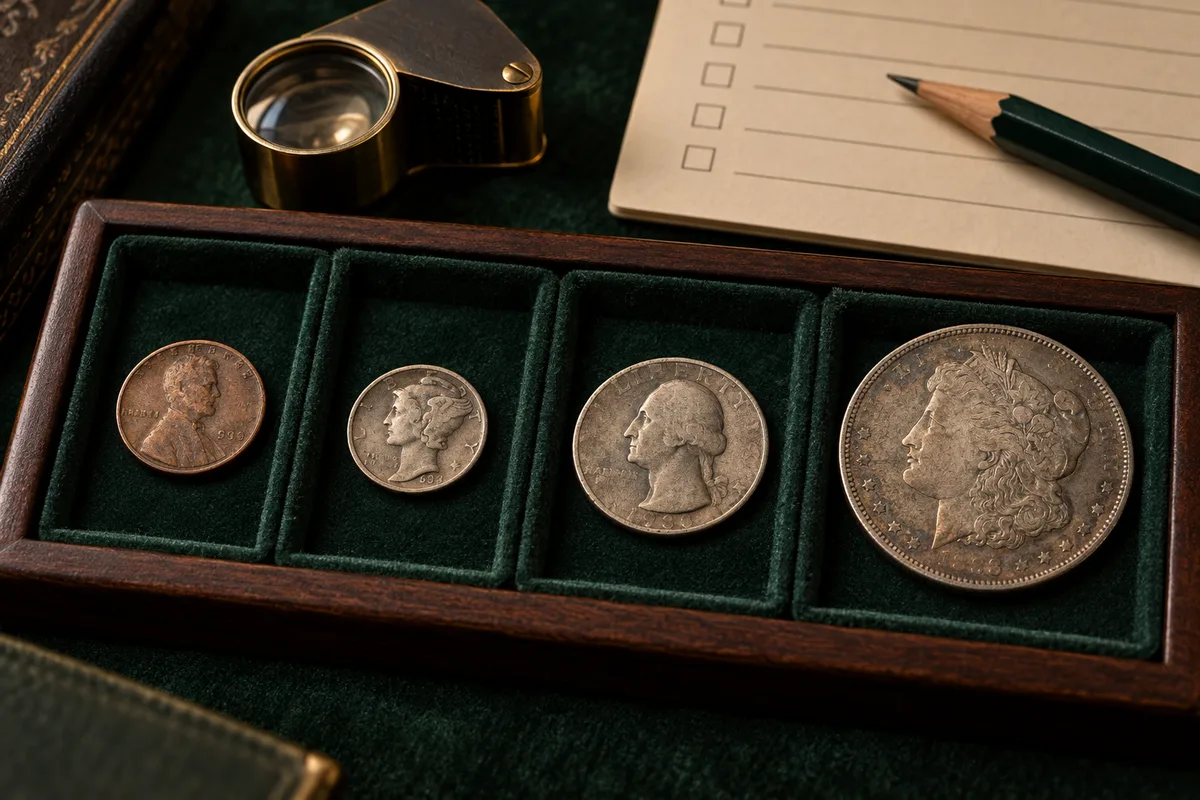
Start with a date-and-mint pair
A date alone rarely settles rarity. Write the denomination, year, mint mark, design subtype, and finish as one identity. Then compare both sides against a series reference. On a scarce issue, an added mint mark or changed digit can turn a common coin into a false “key date.” A clear photo of the complete coin and a close-up of the critical area should accompany any claim.
Lincoln cents
PCGS names the 1909-S VDB, 1914-D, and 1931-S as the traditional major Lincoln cent keys. On the 1909-S VDB, the S on the obverse and the designer’s VDB initials on the reverse must both be present and genuine. The 1914-D demands a credible date and Denver mark; the 1931-S has a low mintage, though survival and grade affect availability. PCGS documents several genuine 1909-S VDB mint-mark positions, so a single memorized S position is not an adequate authentication test.
Dimes and quarters
The 1916-D Mercury dime is a widely collected key; the D on the reverse is the decisive mint letter. For Washington quarters, the 1932-D and 1932-S are the first-year keys. PCGS reports original mintages of 436,800 and 408,000 respectively, but the lower mintage of the S does not automatically make it the harder coin in every grade. Compare the full design and genuine mint-mark examples, especially if the mark area looks disturbed.
Silver dollars
The 1893-S Morgan dollar is a famous key and a frequent target of added-mintmark alteration. The 1928 Philadelphia Peace dollar is another key; it has no mint mark, while a 1928-S is a different issue. PCGS reports 360,649 struck for the Philadelphia 1928 Peace dollar. Do not infer either issue from a silver dollar’s age or from its metal value; attribution begins with the exact date, mark location, and design.
Rarity is grade-specific
A key date can be available in worn grades and very hard to find with original high-grade surfaces, or the reverse can be true when a low-mintage issue was saved early. Cleaning, scratches, corrosion, and weak strikes can also change the grade and price. Compare sales of the same authenticated issue in similar condition rather than a headline record price.
Buying or listing a candidate
For an expensive raw coin, obtain a specialist or recognized grading-service opinion before making a firm rarity claim. Record measurements and unaltered photos. If attribution is still uncertain, use a provisional description and avoid a key-date price. Check the holder number directly with the grading service when a coin is already certified.
Reference reading and real specimens
Use these issue-specific sources to check actual coins. The AI illustration cannot authenticate a coin or establish a rare variety.