U.S. COIN COLLECTING GUIDE
U.S. mint marks: letters, locations, and exceptions
A mint mark identifies a production facility, but its meaning depends on the coin’s date, denomination, and finish. A missing letter is often the expected design.
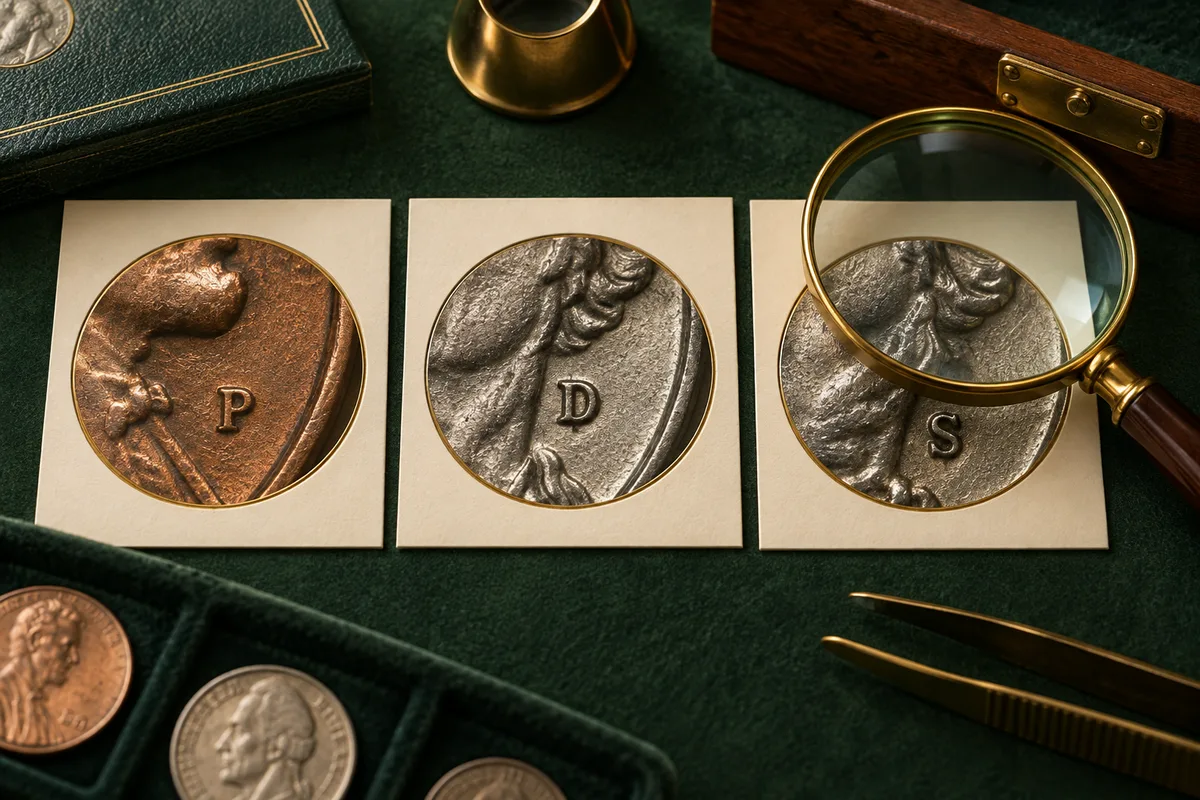
Read the whole coin first
Record the date, denomination, design type, and whether the coin is a circulation strike, proof, or other collector issue. Then look up that issue’s normal mint-mark position. The letter may be on either face and can move between designs or years. A tiny artist’s initial, privy mark, or part of the design is not automatically a mint mark. Photograph the entire face before enlarging the letter.
What the letters mean
The U.S. Mint identifies current P, D, S, and W marks with Philadelphia, Denver, San Francisco, and West Point. Historical branch marks include C for Charlotte, O for New Orleans, CC for Carson City, and D for Dahlonega gold coinage. That historic D does not mean Denver; the date and coin type settle which facility could have struck it. These letters are clues to origin, not a ranking of value.
Why a coin can have no letter
Philadelphia traditionally left its coins unmarked. Its P first appeared on wartime nickels in 1942, returned on the Susan B. Anthony dollar in 1979, and appeared on most denominations except the cent beginning in 1980. The circulating 2017 cent was a one-year P exception. The Coinage Act of 1965 removed mint marks from circulating coins dated 1965 through 1967. A blank mint-mark area on those issues is normal, not a rare omission.
Proofs and changing positions
Proof sets returned in 1968 from San Francisco with an S mint mark. The Mint’s 1968 announcement explains the restoration and the move of marks to the obverse on that year’s circulating designs. Earlier proof coins often have no mint mark because they were made at Philadelphia. Never apply a modern “all proofs have S” rule to an older coin. Special Mint Sets issued for 1965–1967 are another distinct product and should be identified by their set and finish.
When the mark affects value
A particular date-and-mint combination may be scarce because fewer examples were produced or survive, or because collectors demand it. The same S that appears on an ordinary issue may identify a key date in another series. Compare the exact combination with a series reference, then check condition and recent sold examples. A worn letter, filled die, or damaged surface can imitate a missing mark; a suspicious added letter requires authentication.
A practical photo checklist
Take a straight-on image of each face, then a sharp close-up of the date and normal mark location under angled light. Include the edge for composition and authentication work. Keep the coin in its holder if removing it could harm the surface or provenance. If the mark cannot be resolved in a photo, describe it as unreadable rather than assigning a mint.
Reference reading and real specimens
Use these issue-specific sources to check actual coins. The AI illustration cannot authenticate a coin or establish a rare variety.