U.S. COIN COLLECTING GUIDE
Modern mintmark finds: W quarters and “No S” proofs
Two very different modern stories involve a tiny letter: W quarters were intentionally released, while certain “No S” proofs are recognized varieties. Finish and issue identification come first.
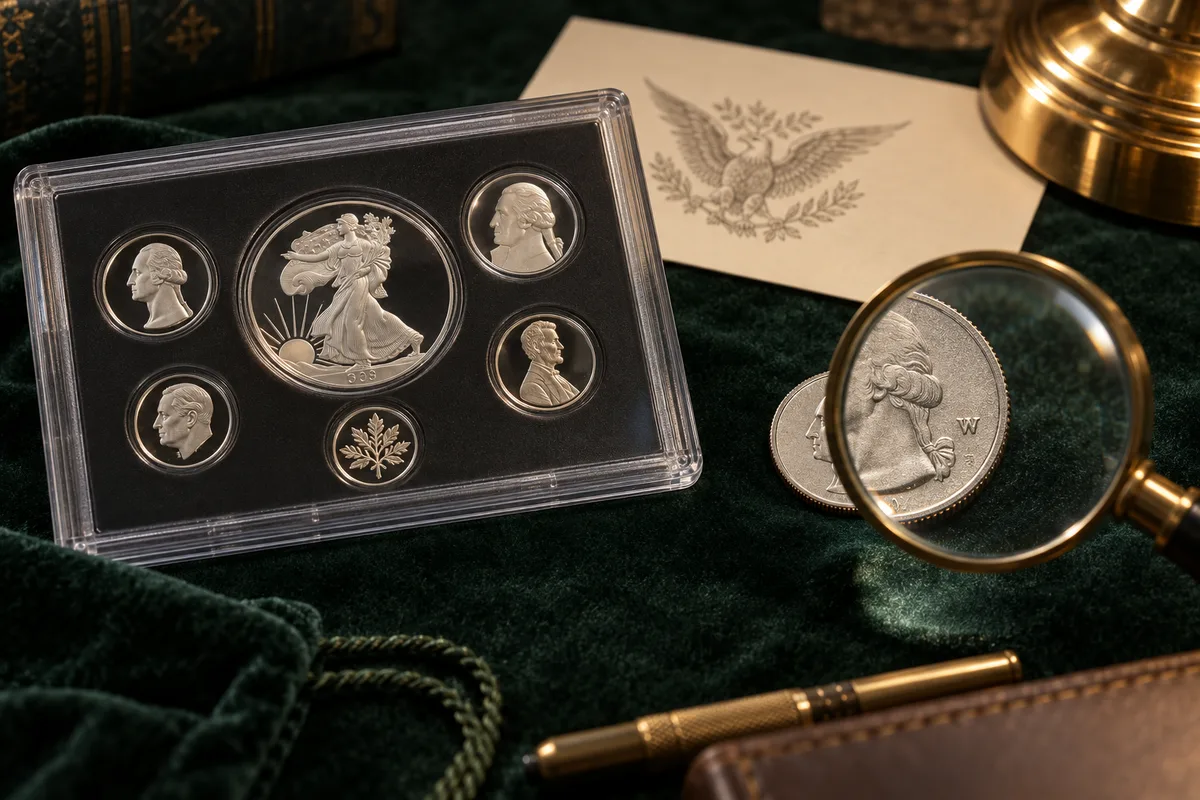
The intentional W quarter release
In 2019 the U.S. Mint placed 10 million West Point quarters into circulation: two million for each of five America the Beautiful designs. Their W identifies West Point and is part of an intentional program, not a missing-mark error. Identify the exact year and reverse design, then compare the mark with the Mint’s issue description. Condition and collector interest still affect value.
A missing S is not enough
The famous “No S” proof varieties require a genuine proof coin of the correct year and denomination. A normal Philadelphia circulation strike can also lack S and may be common. The 1975 Roosevelt dime is the clearest warning: PCGS describes the rare 1975 No S proof separately from the large number of ordinary 1975 Philadelphia dimes with no mint mark. A loose, worn dime is not established as a proof by its blank mint-mark area.
Known proof examples
PCGS documents No S proof Roosevelt dimes dated 1968, 1970, 1975, and 1983, plus other No S proof issues such as the 1971 nickel and 1990 cent. Their rarity differs considerably. Do not generalize from one headline to every proof set or every year. Find the exact reference page, then compare finish, die markers, and provenance.
1965–1967 are a separate case
During the coin shortage, mint marks were omitted on circulating issues dated 1965 through 1967. The Mint temporarily stopped ordinary proof sets and offered Special Mint Sets; proof production resumed in 1968. A 1966 coin without a mint mark is therefore not a “No S” proof rarity. Its date and product type explain the absence.
Inspecting an original set
Photograph the package and every coin before focusing on a missing letter. Plastic glare can hide a small mint mark, while a scratched or replaced holder can confuse provenance. Take more than one lighting angle, compare the coin’s proof finish with official issue information, and keep any suspected rare set intact until a qualified specialist advises otherwise.
Value and escalation
An attributed modern rarity may have a substantial collector premium, but online claims and auction headlines are not evidence for a particular loose coin. For a plausible No S proof, seek professional authentication. For a W quarter, record its design and condition and compare completed sales of that exact issue.
Reference reading and real specimens
Use these issue-specific sources to check actual coins. The AI illustration cannot authenticate a coin or establish a rare variety.