SALARSNET · COIN HISTORIES
Probus Bronze Antoninianus: Coin History and Stories
Probus ruled the Roman Empire from AD 276 to 282. His bronze antoniniani, also catalogued as radiates, survive with varied imperial portraits and reverses. Museum examples provide type comparisons; a particular coin’s mint, issue and design still require individual attribution.
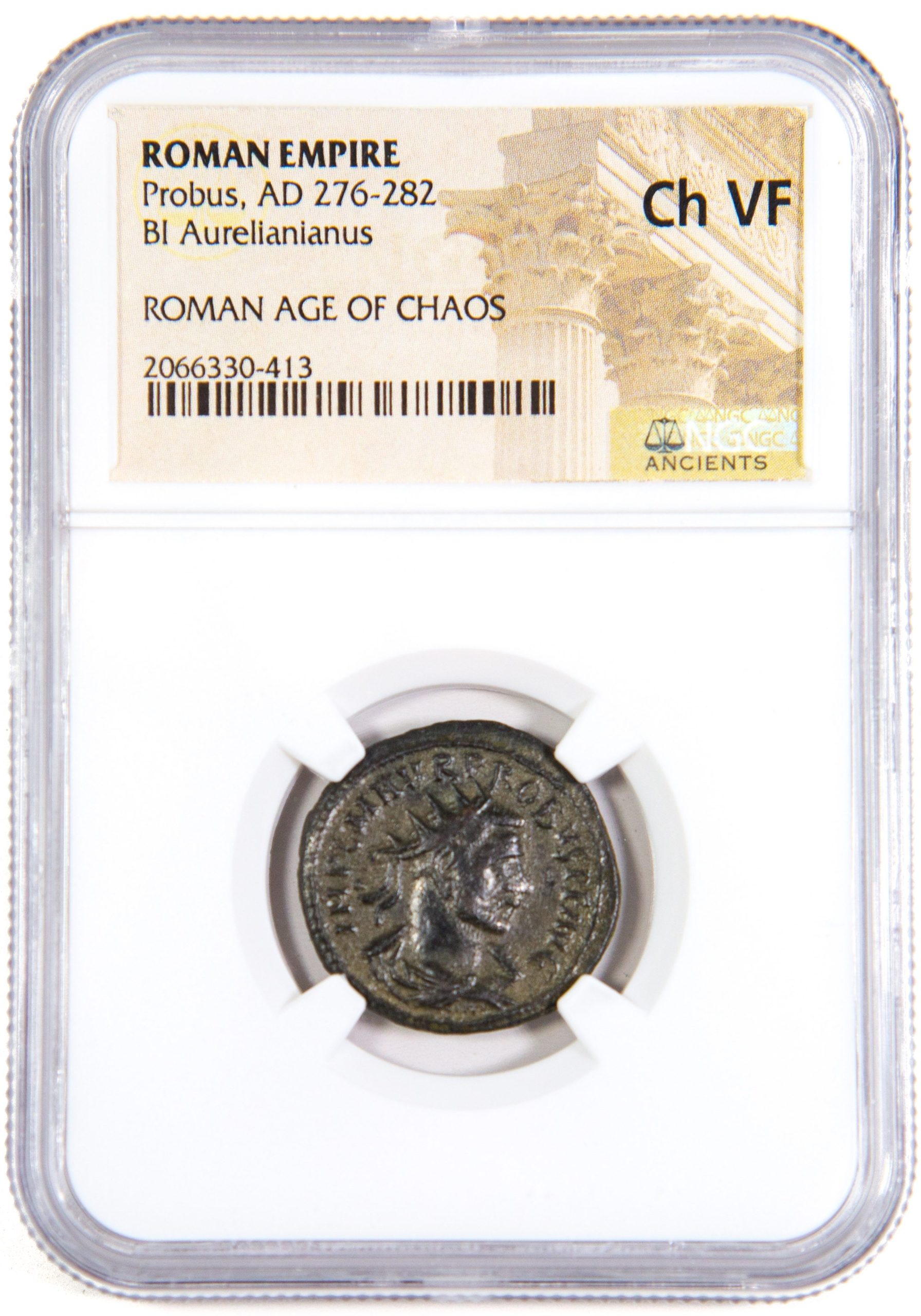
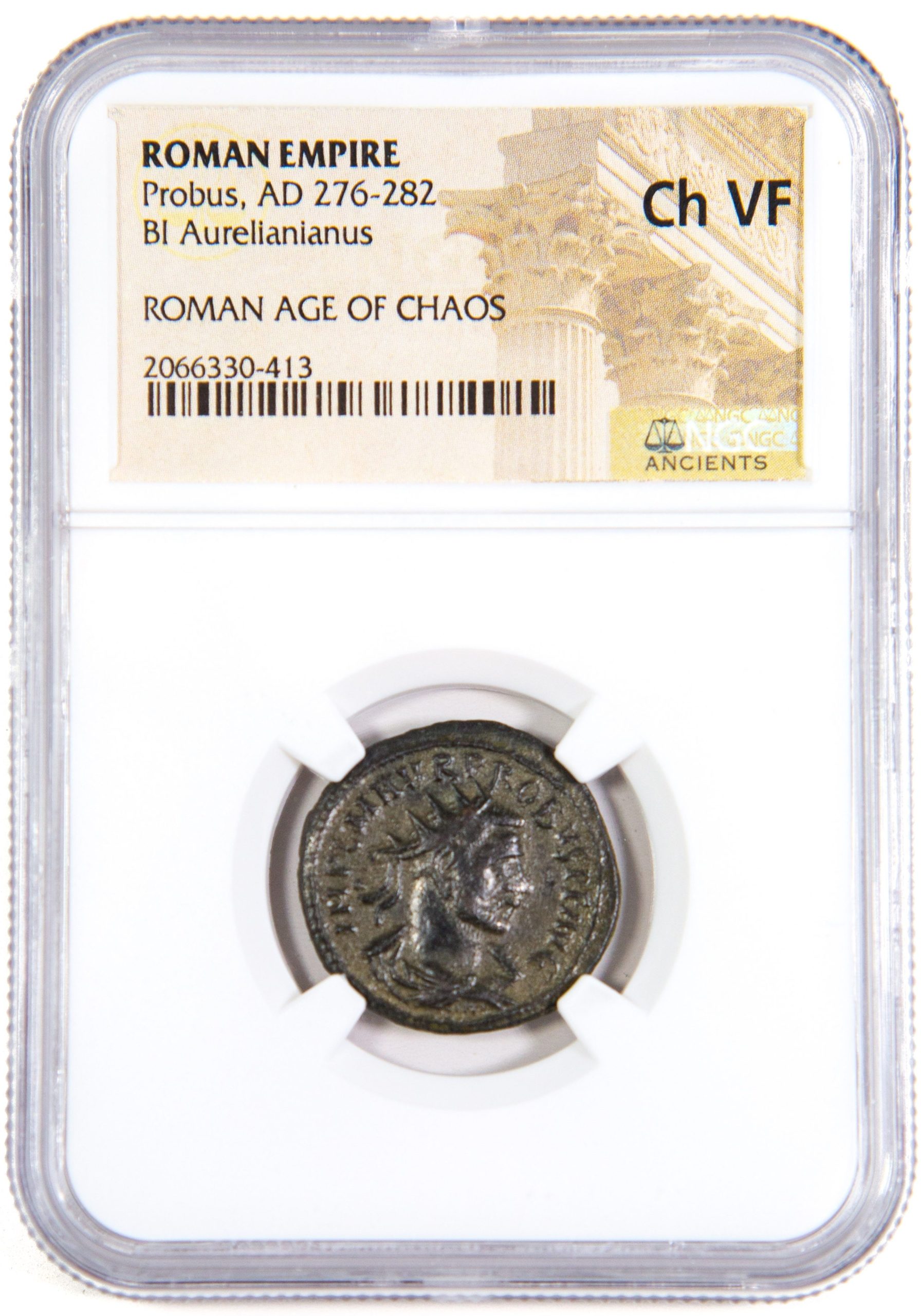
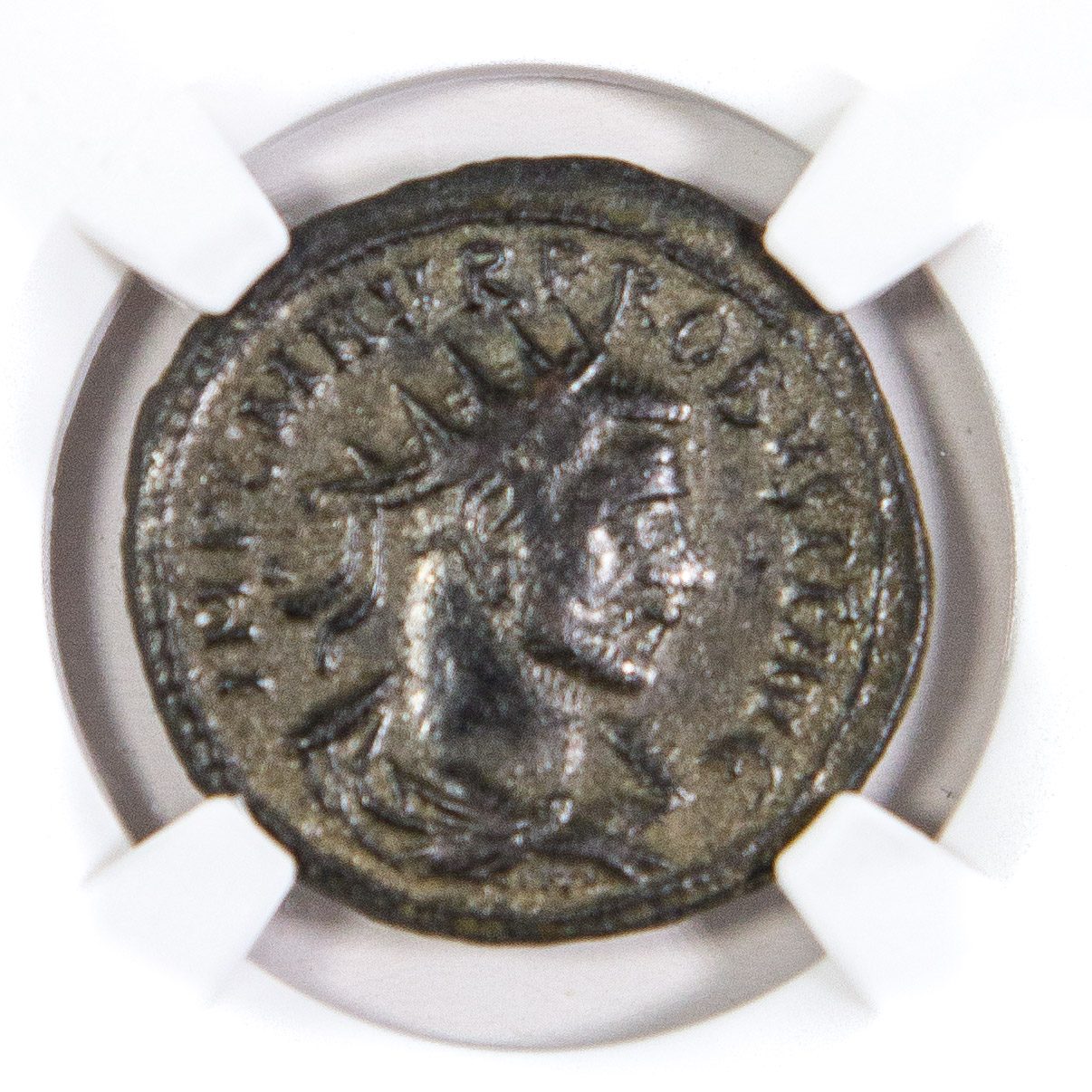
Coin facts at a glance
- Authority
- Probus; Roman Empire
- Reign range
- AD 276–282
- Coin type
- Antoninianus / radiate
- Material
- Bronze / copper alloy in the compared institutional examples
- Portrait and reverse
- Designs vary by issue; exact specimen attribution requires its legends and mint evidence
History of the coin
A soldier emperor in a divided age
Probus became emperor in AD 276 and ruled until 282. His military career and campaigns belong to the later third-century struggle to hold together the empire’s frontiers. Robin Mc Mahon’s scholarly account follows his accession, western campaigning and the revolts that disrupted his plans.
A coin dated broadly to his reign cannot by itself be assigned to a particular campaign. Nor does its portrait prove that it was paid to a soldier or spent near an army camp. Such a setting is a possibility for fiction, not a documented history of the offered specimen.
References: Robin Mc Mahon: Probus, De Imperatoribus Romanis.
A portrait with more than one possible reverse
A British Museum copper-alloy radiate attributed to Probus shows a helmeted, radiate bust carrying a spear and shield. Its reverse shows the emperor on horseback. The Ackland Art Museum catalogs a bronze antoninianus with different imagery: imperial robes, an eagle-tipped scepter and the sun god Sol in a quadriga.
These institutional comparisons demonstrate why a ruler’s name is not a complete type attribution. Portrait equipment, legends, reverse figures and mint evidence matter. Neither comparison is a promise that ECC will supply that exact design; the supplier expressly lists various mythological and military reverses.
References: British Museum: Probus radiate, R.17390; Ackland Art Museum: Probus bronze antoninianus with Sol in a quadriga; ECC: exact Probus NGC VF offering; ECC: exact Probus NGC AU offering.
Vineyards, public work and the sources behind the story
The Life of Probus in the Historia Augusta describes permissions to cultivate vineyards and soldiers preparing ground for vines near Sirmium. This is an ancient literary account, not a modern excavation report. Mc Mahon cautions that reconstructing Probus’s life is complicated by the unreliable nature of parts of that tradition.
The vineyard episode below uses that agricultural association as a starting point for an invented encounter. Its farmer, water channel, soldier’s leave and planting instructions are not recorded events. Treating the source critically preserves the difference between a coin’s documented imperial attribution, an ancient author’s narrative and our own historical fiction.
References: Robin Mc Mahon: Probus, De Imperatoribus Romanis; Historia Augusta: Life of Probus, LacusCurtius.
Historical fiction inspired by this coin type
These stories imagine people and events around the coin type. They are separate from the documented history and do not describe the provenance of an offered specimen.
The Second Verse
5 minute read · 1018 words
Original historical fiction set in an imagined household in Rome in AD 281. Rufus, his family, Paulus, the wedding, song and particular coin are invented; this is not the provenance of a supplied coin.
On the third repetition of the second verse, the baker came out with flour on his arms and asked Rufus whether he intended to sing at the wedding or prevent it.
“I’m practicing.”
“So I hear.”
Rufus held up a coin. “I have paid for this courtyard.”
“You paid my nephew to listen. The courtyard came with him.”
The nephew, Paulus, sat on an overturned basket. Rufus had hired him because the boy remembered songs and did not remember Rufus at twenty. There were plenty of people in Rome who claimed to remember Rufus at twenty. They generally did so when he stood up to sing.
Tomorrow his son was marrying. Rufus had promised a song. He had made the promise after wine, but he had repeated it the following morning, when excuses would still have been respectable. His son had smiled in a way Rufus could not stop thinking about.
“It is the long note,” Paulus said when the baker went inside. “You keep arriving at it with no breath.”
“It used to come easily.”
“Then breathe earlier now.”
Rufus tried. A woman passing with a bundle of greens slowed down. He reached the note, held it, and broke into a cough. The woman continued walking.
Paulus looked at the ground. Rufus wished the boy would laugh. He knew what to do with laughter.
“We can shorten it,” Paulus said.
“We will not shorten it.”
The song was older than his marriage. He had sung it to his wife while she sat on the step outside their first room, tearing the damaged leaves from a cabbage. She had asked whether every woman he courted had to listen to the same song. He had said no, only the ones with cabbages. She had laughed so hard she dropped the knife.
That was the version he remembered. His wife said she had laughed because his voice frightened a cat.
“Again,” he told Paulus.
By noon his throat hurt. Paulus had stopped suggesting changes. When Rufus missed the note he simply began humming the tune from the place where they had left off. This was worse than criticism. Rufus paid him, taking a coin with Probus’s face from his pouch, and said he would manage the rest alone.
At home his wife was sorting cups on the table. She took one look at him and poured water.
“Did you practice with the boy?”
“He has opinions.”
“So do you. Yours cost us nothing.”
Rufus drank. She turned a chipped cup toward the wall.
“I thought you would sit beside me tomorrow,” she said.
“I will.”
“Without rehearsing under your breath.”
“I don’t rehearse under my breath.”
She waited. He realized he had begun moving his lips.
The next afternoon their son came early to carry the benches. He was wearing good clothes and holding one shoulder stiffly so he would not rub it against the doorway. Rufus told him to change. His son said there was no time. Together they moved the first bench, the father warning him about the threshold after he had already stepped across it.
“Mother says you’re singing the old song.”
“I know others.”
“I like that one.”
Rufus tightened his grip on the bench. “You’ve heard it enough.”
“Not from you. Mother sings it when she’s kneading.”
“She leaves out a verse.”
“She says it’s a poor verse.”
Their son laughed, then glanced toward the street. The bride’s family were approaching. Rufus set down his end too soon. His son caught the weight and said something quite unsuitable to a wedding.
The room filled. People who had arrived hungry immediately discovered urgent reasons to stand near the food. Rufus’s wife kept her hand on his sleeve while she introduced a cousin he had met six times. Whenever she released him he found himself measuring the room with his eyes. From beside the door, his voice would carry. From beside the table, he could hold the edge if the cough returned.
Then his son asked for the song.
Rufus stood by the door. A child sat down on the threshold and was pulled back by an aunt. The bride smiled politely. His wife moved a cup out of the way.
The first verse came easily. He could hear himself above the rustle of clothes and the scrape of a dish. He gave the long note all the breath he had saved.
It failed halfway through.
Somebody looked down. Somebody else stopped chewing. Rufus pressed his tongue against his teeth, swallowed, and began the line again. A smaller voice might reach it. He had never wanted a smaller voice more urgently.
His wife began singing from her place beside the table.
For an instant he resented her. The whole room could see that she was rescuing him. He almost stopped. Then she reached the next line and used the wrong words, the words she had always used while kneading, and their son joined her.
Rufus listened. They knew where to breathe together. They knew which syllable to hurry. This song had been going on in his house for years while he was looking elsewhere.
He joined at the end of the line. His voice sounded rough beside theirs. He took the lower part and left the long note to his wife. Across the room, the bride began to find the tune. She sang softly at first, watching her new husband’s mouth.
When the poor verse approached, Rufus drew breath. His wife looked directly at him.
He skipped it.
She smiled without losing the next word.
Afterward there was applause, then a fierce argument between two cousins about how the ending ought to go. The child on the threshold demanded the skipped verse. Rufus said it concerned a cabbage and was too foolish to sing. His wife said that had never stopped him before.
He sat beside her. His throat hurt, but there was no reason to test it.
“Your mother frightened the cat,” he told the bride.
“Did I?” his wife said.
Rufus put his hand over hers beneath the table. “It was a very nervous cat.”
Documented and imagined
Probus’s reign and bronze radiate coinage are documented. The singing lesson, family wedding, melody, fee, dialogue and all characters are invented. No specific Roman wedding rite, ancient song text, exact price or connection to the offered specimen is asserted.
A Place for the Water
5 minute read · 1029 words
Original historical fiction in an imagined vineyard in Roman Gaul during Probus’s reign. The farmer, soldiers, water channel, orders and coin transaction are invented; this story is not the provenance of the offered coin.
Tertius had planted seventeen stakes in a straight line when the woman kicked over the eighteenth.
He looked along the hillside to where the other soldiers were digging. None of them had seen. That annoyed him more than if they had.
“Put it back,” he said.
“You’ve put it in my water.”
There was no water. There was grass, a pale strip of mud, and the woman’s muddy foot.
“I’m Varia,” she said. “This is my field.”
“This is where we’ve been told to plant.”
“Yes. I was here when you were told.”
Tertius had six days before he could leave for home. Six days if the officer signed his leave, if the road stayed open, if nobody decided that a man who could hold a spear could also carry stones until winter. He had spent most of the morning persuading himself that a row of vines was easier than a road. Now Varia was standing in the row.
He fetched the officer’s sketch from beneath his belt. The lines on it were handsome. They ran across the slope at equal intervals. He had measured his spacing with a cord and had counted every stake twice.
Varia glanced at the sketch. “Did he draw that before or after it rained?”
“Where does your water come from?”
She pointed toward a tangle of hazel above them. “In dry weather it gives us enough to fill a jar. When the rain comes, it gives us whatever it likes.”
“We’ll move the channel.”
“We?”
Tertius regretted the word. He had three men, tools meant for shallow planting holes, and a downhill path full of vine cuttings. He also had an officer who intended to count the planted rows before sunset.
They found the channel under the grass. It was narrow, lined in places with flat stones. Varia’s father had dug it. Varia had repaired it. Her little boy carried their drinking water along it when the spring was low, balancing a jar with both hands and breathing through his mouth.
“He spills half,” she said. “Don’t tell him I told you.”
Tertius could keep that secret easily. The channel was another matter. He proposed cutting a new line around the upper edge of the planting. Varia walked it with him. She stopped where he wanted to turn.
“That sends it into my neighbor’s yard.”
“Then we turn again.”
“His pig will enjoy that.”
The first drops of rain landed on the sketch. Tertius folded it. Varia watched him, her face neither satisfied nor kind.
“You can leave this strip,” she said.
“The rows have to match.”
“Match what?”
He did not answer. Downhill, a soldier dropped a bundle of cuttings and swore at the sky. The tools would have to be cleaned. The men would want food. The officer would want seventeen finished rows, and Tertius had seventeen rows mostly represented by upright sticks.
He sent two men to keep planting below the channel and took the third to widen a shallow bend. They were still moving stones when water began to run. At first it slipped neatly around the turn. Then a clod broke loose beneath Tertius’s shovel. The water carried it into the narrow passage farther down and stopped.
The shallow stream grew a dark, spreading shoulder.
Varia was already running toward it. “Here!”
Tertius jumped across the channel and sank ankle-deep. His sandal stayed in the mud when he pulled his foot free. The soldier beside him laughed, then stopped when Tertius thrust the shovel into his hands.
“Clear the passage.”
“With this?”
“With your teeth if you prefer.”
They cleared it with their hands. By then water had entered the first planting holes. One cutting floated sideways, its little roots showing. Varia caught it and passed it to Tertius as though he were responsible for its survival in particular.
The officer arrived while Tertius was kneeling in the wet grass with one bare foot.
“Your line is crooked.”
“Yes.”
“Why?”
Tertius pointed uphill. He could have said the woman had interfered. He could have shown the sketch and explained that he had followed it. The water had already begun clearing his explanations out of the planting holes.
“There’s a channel. I tried to move it. That was wrong.”
Varia set a flat stone into the cleared bend. She said nothing.
The officer looked down the slope. “How many cuttings have you lost?”
“None yet.”
“Yet?”
Tertius held out the wet roots. “If we plant these now, above the overflow, they’ll have ground that drains. If we fill the passage to make the rows match, you’ll have a wet patch to plant again.”
The officer had spent the previous day counting broken tool handles and hearing explanations about a missing mule. He looked toward the waiting bundles. “Show me the new line.”
Varia took the cord before Tertius could reach it. Together they marked the curve. The officer shifted two stakes, keeping the planting farther from the stones. It was not Varia’s line or Tertius’s. Tertius would have to measure it again.
“You stay until it’s finished,” the officer said.
“My leave—”
“Starts when this is finished.”
He went downhill. The rain followed him, steady now.
Varia bought bread for the men from a cart on the road. Tertius saw Probus’s little portrait pass from her hand to the seller’s. She returned with the loaf tucked beneath her cloak, where it stayed dry, and divided it without asking who deserved more.
They planted until the hillside began to lose its separate colors. Varia’s boy brought a lamp, then stood watching while Tertius lifted the last cutting out of its bundle. The officer had not come back. The channel was running clear.
“Is that straight?” the boy asked.
“No,” Tertius said.
“My mother says it’s right.”
“Your mother kicked over my stake.”
The boy looked delighted. “She does that.”
Varia appeared carrying Tertius’s sandal. She had washed it in the channel and found the broken tie. “You’ll need a new cord before you walk far.”
He took it, flexing the wet leather. “I have some.”
“Good.” She pointed at the planted slope. “Leave the stakes. I’ll count them in daylight.”
Documented and imagined
Probus’s reign and the existence of bronze radiates bearing his portrait are documented. Ancient literary accounts associate him with vineyard cultivation and military labor, but do not record this episode. Varia, Tertius, the officer, child, weather, leave arrangements, dialogue and particular coin are invented. No ancient wage schedule, exact planting site or offered-specimen connection is claimed.
Historical references and product evidence
- Robin Mc Mahon: Probus, De Imperatoribus Romanis ↗
Scholarly chronology for the AD 276–282 reign, campaigns and source limitations; distinguishes later literary claims from secure reconstruction.
- British Museum: Probus radiate, R.17390 ↗
Institutional copper-alloy type comparison with radiate helmet, spear and shield, and an equestrian reverse. Its Cyzicus attribution and measurements do not describe the offered specimen. Collection metadata checked through institutional search results; direct retrieval was unavailable.
- Ackland Art Museum: Probus bronze antoninianus with Sol in a quadriga ↗
University museum example of a different portrait and reverse pairing, dated to AD 276–282. This comparison is not an inventory photograph or an included design guarantee. Institutional indexed metadata checked; direct object-page retrieval was unavailable.
- Historia Augusta: Life of Probus, LacusCurtius ↗
Primary ancient literary account, especially chapter 18, behind the vineyard association. Read with the scholarly source’s reliability cautions; it does not document the fictional project in Gaul.
- ECC: exact Probus NGC AU offering ↗
Exact public supplier page checked in the browser October 5 for order code, NGC/AU designation, bronze, variable reverses, approximate 21–23.5 mm size and representative images. It displayed Out of stock. Current Salars price and availability belong to the live product options; holder/package weight is not coin weight.
- ECC: coin and banknote grading guide ↗
Supplier definition of VF as Very Fine; this does not independently certify the available coin or its holder label.
- NGC: guarantee for ancient-coin grading ↗
Current distinctions between the grade guarantee and opinions on authenticity and attribution.
- ECC: exact Probus NGC VF offering ↗
Public supplier page checked October 5 for SKU, NGC/VF designation, stated bronze, variable reverses, approximate size and representative images. It displayed Out of stock; live Salars options supply current commercial information.
Sources distinguish institutional and independent type research from supplier evidence about a particular offering. Research dates do not establish current inventory.