U.S. COIN ERROR GUIDE
Errors on U.S. dimes, quarters, and half dollars
These denominations changed composition, designs, and mintmark practices. The date determines which metal and normal design details to expect.
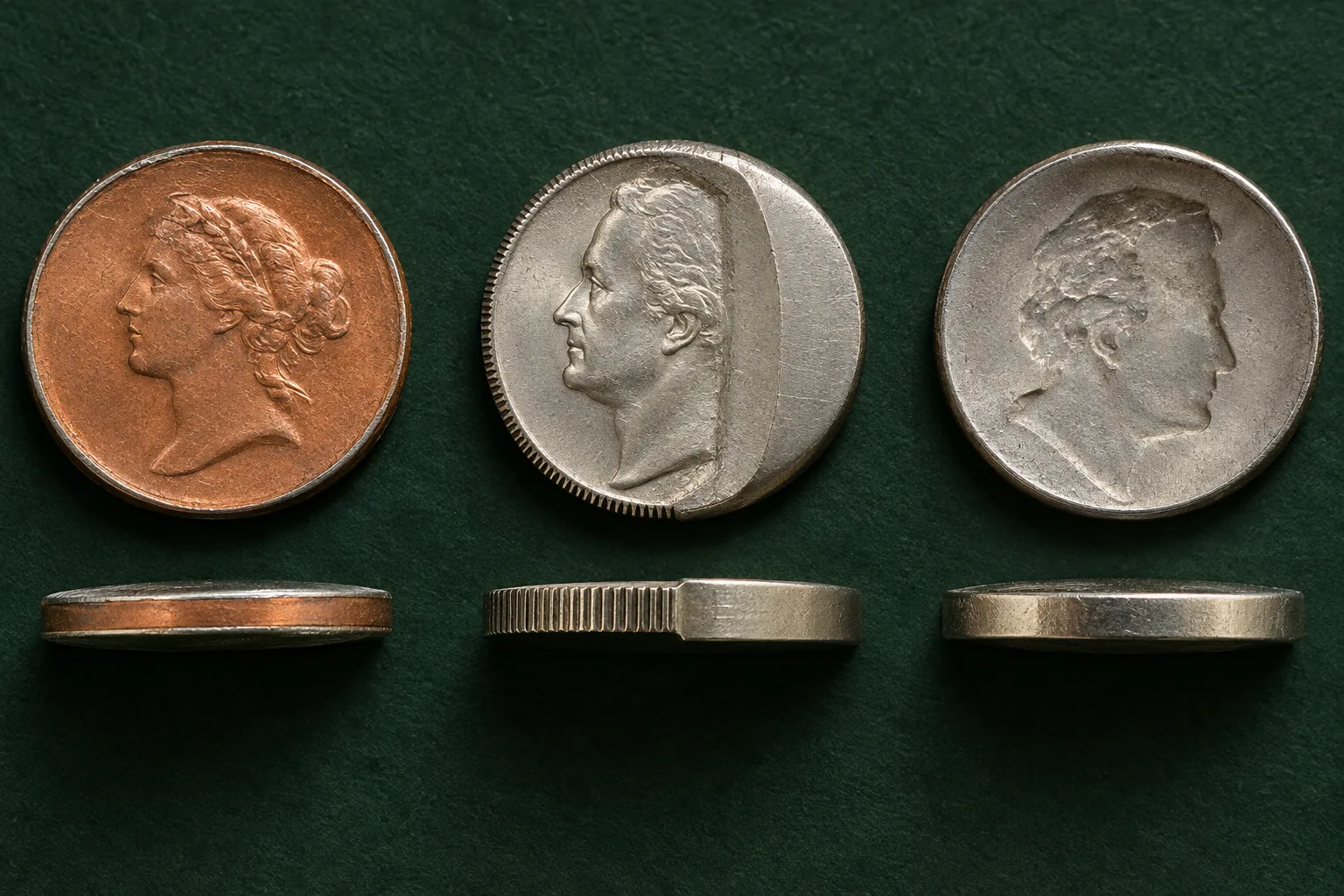
Dimes, twenty-cent pieces, and quarters
Look for verified doubled-die markers, off-center strikes, clips, die breaks, and wrong-planchet evidence. A weak or worn date is not by itself a missing-date error. Modern quarter designs require comparison with the exact program and reverse.
Half dollars
Check the series before comparing details: early types, Barber, Walking Liberty, Franklin, and Kennedy halves have different designs and known variety references. For 1964 Kennedy proofs, the Accented Hair diagnostic is a design variety, not an accidental strike error.
Silver versus clad
Pre-1965 circulating dimes, quarters, and halves were 90% silver. Kennedy halves then moved to 40% silver before regular clad halves. Do not use one melt preset across all dates or proof-set types.
Proof packaging
Plastic reflections, seams, haze, and scuffs can resemble lines or doubled details. Photograph the coin through a clear area from more than one angle.
Start with the issue, not the color
Dimes, quarters, twenty-cent pieces, and halves include many silver and clad compositions. Modern silver proofs and special issues can depart from the circulating coin of the same year. Check the Mint’s issue description and specifications before calling a coin a wrong-metal strike or calculating melt value. Proof haze, toning, and reflections from packaging can change apparent color significantly.
A design that looks missing may be normal
Quarter reverses changed repeatedly through commemorative programs. A feature absent from one design may be intentional on another. Weak strike, worn dies, wear after circulation, and grease-filled dies can all reduce detail, but they differ in surface character and in what happens to nearby devices. Compare the exact year, mint, design, and finish with a normal specimen before claiming a missing element.
Half-dollar varieties versus strike errors
Kennedy’s 1964 Accented Hair proof is a design variety used on early proof strikes, not an off-center or multiple-strike error. The hair above the ear and missing lower-left serif on the I in LIBERTY are the main obverse checks. Other half-dollar series require entirely different diagnostics. A set wrapper cannot independently establish variety or grade.
Proof-set inspection workflow
Photograph the full sealed set for provenance, then each coin straight on and at a slight angle. Move the light rather than assuming a line on the plastic is a die crack. If the case prevents a clear diagnostic, describe the variety as unconfirmed. Avoid opening an original holder solely for a photograph without considering how packaging and condition affect saleability.
Reference reading and real specimens
Use these source photographs and specifications to check an actual coin. The AI illustration above cannot authenticate a coin or show an exact die marker.