U.S. COIN ERROR GUIDE
U.S. coin errors: where to start
A mint error happens during manufacture; a die variety repeats on coins made from a particular die. Damage after the coin leaves the Mint can imitate both. Use the linked guides to narrow a feature before making a value claim.
The inspection order
Identify the denomination, date, mintmark, composition, and whether the coin is a proof, business strike, or special issue. Photograph both faces, the full rim, and the edge. Then compare the unusual area with a normal example of the same issue.
Major families
Planchet errors concern the blank or metal. Die errors and varieties concern the tool that carries the design. Striking errors concern alignment, feed, collar, or repeated strikes. An apparent error may instead be wear, corrosion, cleaning, a scratch, or altered packaging.
Planchet and metal checklist
Check clips, incomplete blanks, laminations, split planchets, wrong planchets, wrong stock, missing clad layers, and unusual alloy or plating. A credible metal claim needs measured weight and dimensions, not color alone.
Die and strike checklist
Check die cracks, cuds, chips, clashes, doubled dies, repunched details, off-center and broad strikes, partial collars, rotated dies, multiple strikes, brockages, capped dies, mules, and struck-through material. Each type has different evidence on the two faces and edge.
Which U.S. coins are covered
Use these checks for half cents; large and small cents; two-cent, three-cent, and five-cent pieces; dimes; twenty-cent pieces; quarters; half dollars; dollars; U.S. gold denominations; commemoratives; and modern bullion issues. Each date and design still needs its own reference.
Value requires attribution
A feature can interest collectors when it is genuine, identifiable, and desirable. The date, denomination, grade, severity, and documented sales all matter. A photograph or AI suggestion alone cannot establish a premium.
Follow the manufacturing sequence
The Mint cuts blanks from metal stock, raises their rims to make planchets, and presses each planchet between two dies inside a collar. Some dollar coins receive edge lettering in a later step. That sequence is a useful filing system for an unfamiliar feature: did it begin in the metal, in the die, during the strike, or after the coin left the press? The Mint’s production explanation shows each operation.
What a photograph can establish
A clear image may show displaced design, missing metal, or repeated die detail. It cannot measure mass, prove alloy, establish an exact grade, or determine whether a line is on a proof coin or its plastic case. Take a straight-on image of both sides, then an angled image that reveals relief. Record diameter, weight, thickness, and edge only when handling the coin is appropriate. Keep the raw photos so a later reviewer can judge the evidence.
Use precise names
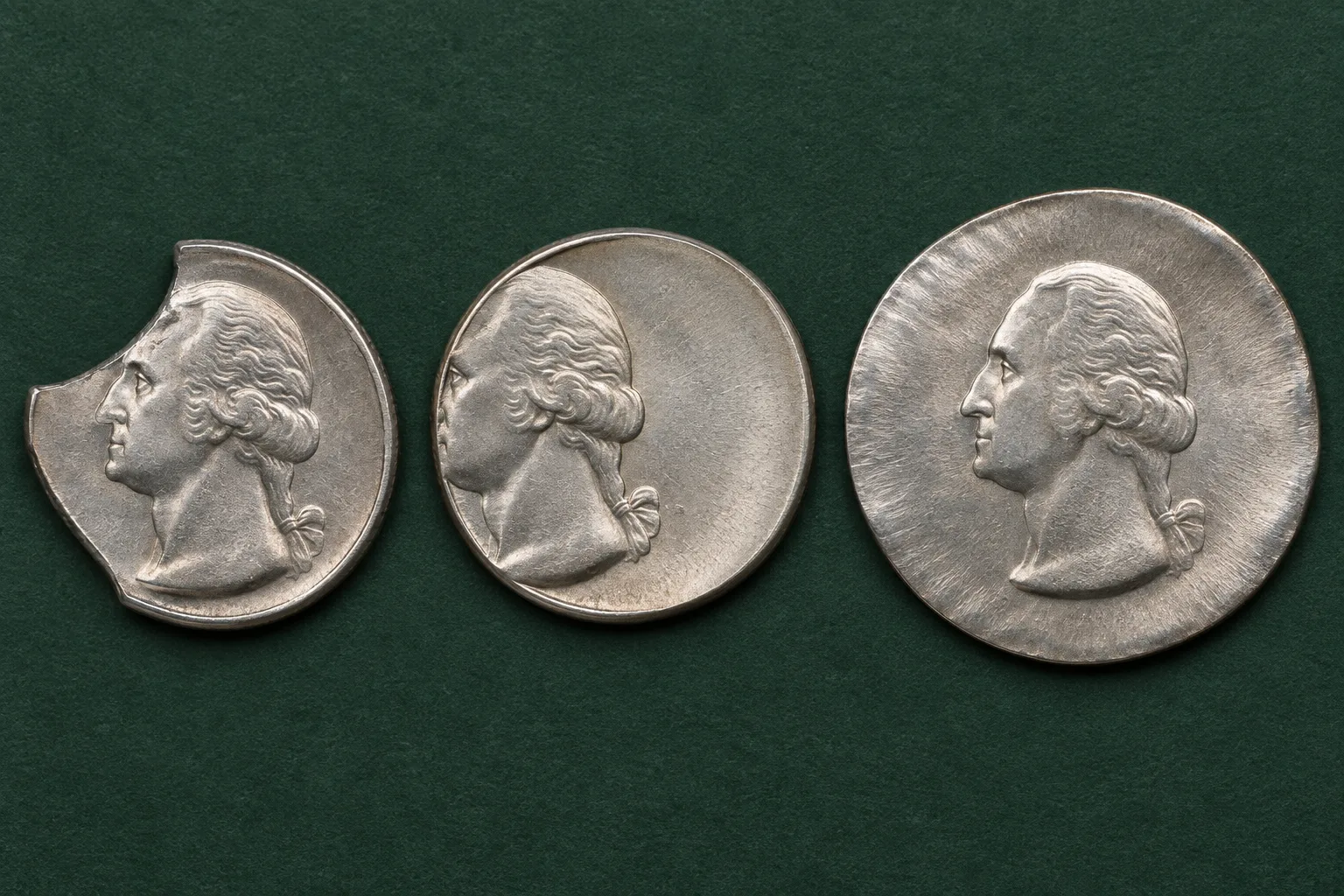
A clipped planchet is missing blank metal before the strike. An off-center strike leaves an unstruck portion of a full blank. A broadstrike spreads when the collar does not contain the metal. A doubled die repeats the same doubled design on all coins from that die; a second strike is a separate press event. Calling these all “errors” hides the evidence needed to identify them.
A value decision, not a promise
Some small die chips and weak strikes are common. An unmistakable, attractive error with its date visible may attract more demand, but rarity, grade, series, and current comparable sales govern price. Confirm the type before comparing sales. If the proposed premium is meaningful, seek an independent specialist’s attribution before writing a firm listing claim.
Reference reading and real specimens
Use these source photographs and specifications to check an actual coin. The AI illustration above cannot authenticate a coin or show an exact die marker.