U.S. COIN ERROR GUIDE
Striking and collar errors on U.S. coins
A striking error happens when the dies, blank, feeder, or collar do not meet as intended. The design position and metal flow are more useful than an unusual shape alone.
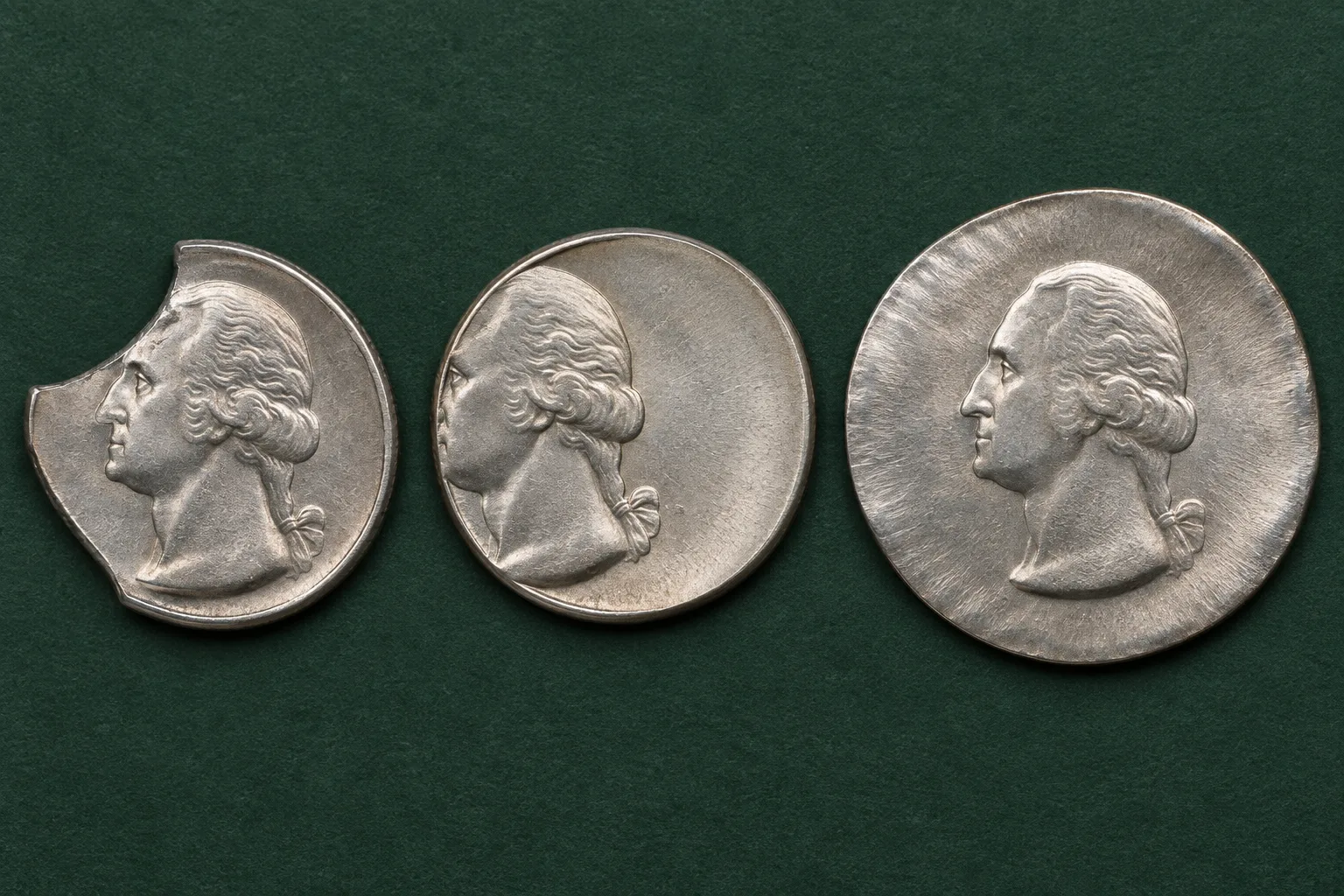
Off-center strikes
Part of the design is missing because the blank was not centered between the dies. The unstruck crescent and the amount of missing design help describe the error. A misaligned die can shift one face without the same pattern on the other.
Broadstrikes and partial collars
A coin struck without the collar can spread wider than normal. A partial collar can leave an uneven or stepped edge. Compare diameter, rim, and edge to a normal coin.
Multiple strikes and brockages
A second strike can show displaced design elements; a brockage has a mirror-image impression from another coin caught in the press. Flat machine doubling and damage are different phenomena.
Rotations, mules, and struck-throughs
A rotated die changes the alignment between the two sides. A mule combines mismatched dies. Grease, cloth, or another object caught during striking can leave missing or impressed detail. First compare the normal alignment and design for that exact issue.
Weak or missing design
A filled die, grease, or insufficient strike pressure can weaken details. Heavy wear can do the same after circulation, so examine luster, adjacent devices, and the opposite face.
Off-center or merely misaligned?
With a true off-center strike, the blank sits away from the intended position and a portion remains unstruck. Both sides should be examined for their relationship to the blank edge. A misaligned die can displace a design on one face while the other remains centered, so it should not automatically be called an off-center coin. Estimate displacement only after photographing the whole coin straight on; show whether the date remains visible.
Read the rim and edge
The collar confines metal and forms much of the finished edge. If it is absent, a broadstrike spreads outward and generally lacks the normal fully formed rim. If the blank enters the collar only partway, a partial collar strike can create a stepped or “railroad” edge. A coin flattened by later force may also look wide, but its original design and edge often show compression or damage. The official Mint process explains why the collar matters.
Two strikes, a brockage, or a filled die?
A retained coin struck again can show overlapping designs at different positions or rotations. A brockage is an incuse, reversed impression transferred by another struck coin trapped against the blank. A struck-through object can obscure or impress details; grease-filled dies can produce weak or absent elements without a second design. These mechanisms leave different relief, so photograph with angled light before naming the error.
Keep dramatic claims testable
Mules and major rotations need exact comparison with the normal die pairing and orientation for that issue. A rotated reverse should be measured against the normal coin-turn alignment. Edge lettering may be applied in a separate operation on some dollars, creating another possible failure point. Professional authentication is sensible when a claimed mule, major brockage, or wrong pairing would materially affect price.
Reference reading and real specimens
Use these source photographs and specifications to check an actual coin. The AI illustration above cannot authenticate a coin or show an exact die marker.