U.S. COIN ERROR GUIDE
Errors on U.S. dollar coins and modern issues
Dollar coins vary widely in size, edge, and composition. A claim about a wrong metal or missing edge lettering starts with the correct specifications for that series.
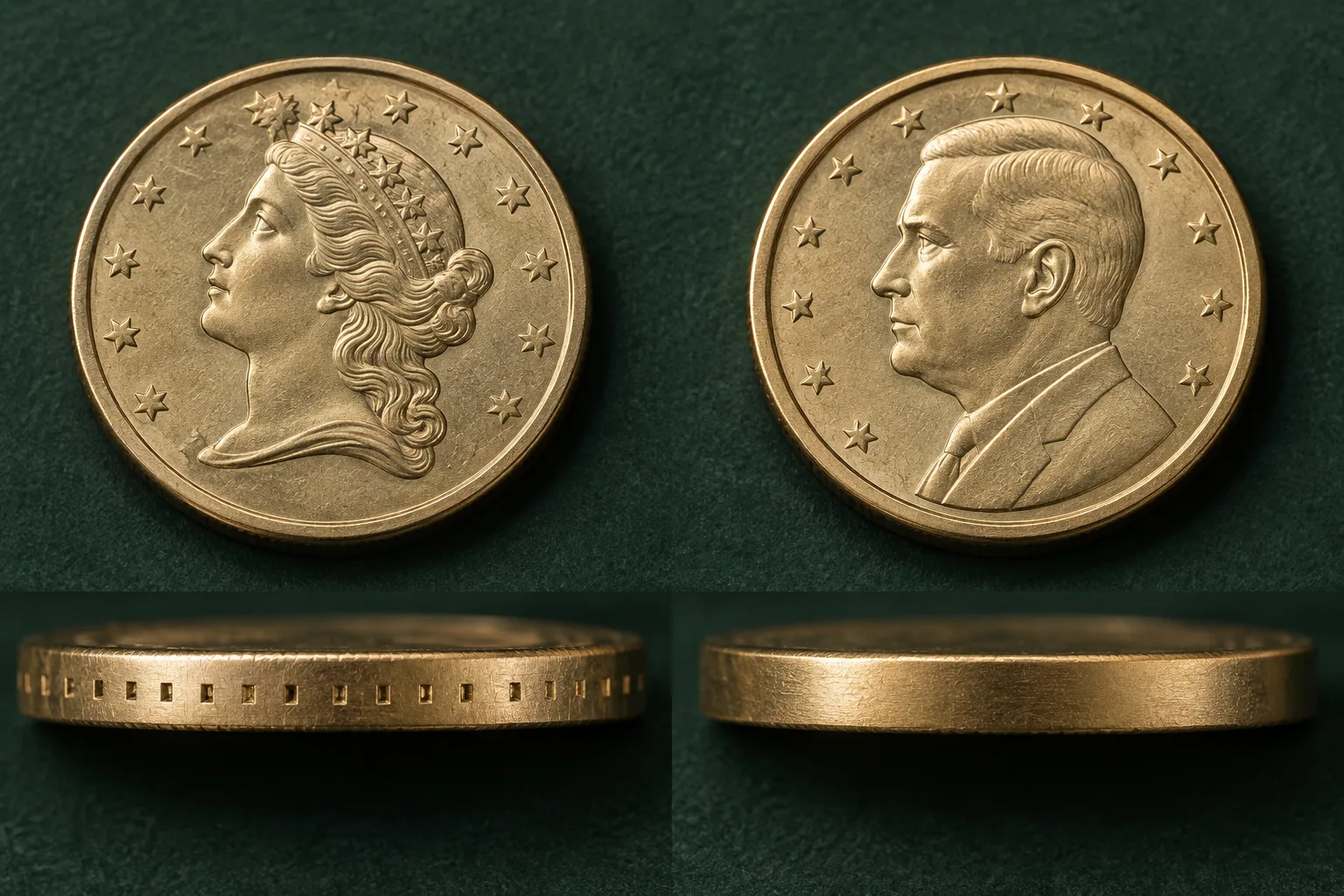
Morgan and Peace dollars
Use the correct mintmark location and established die-variety references. Die cracks, doubled details, off-center strikes, and wrong-planchet claims require separate evidence. Contact marks and polishing are common lookalikes.
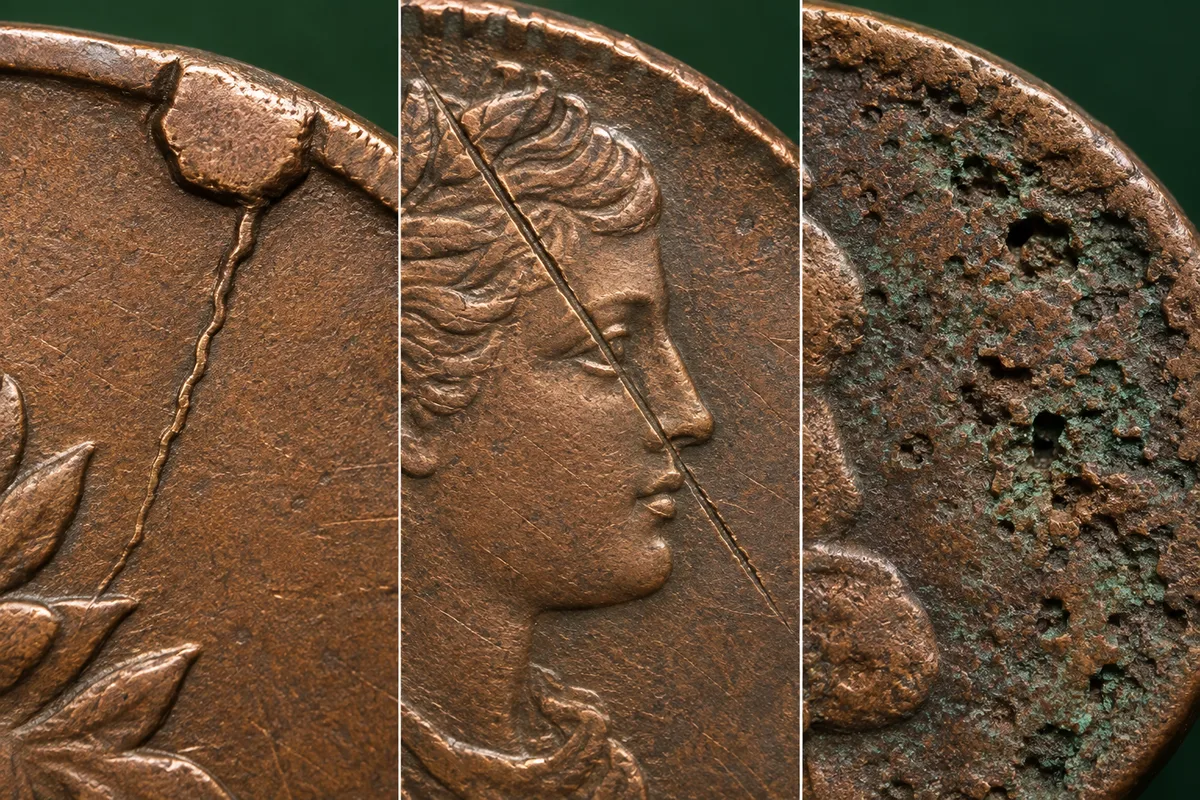
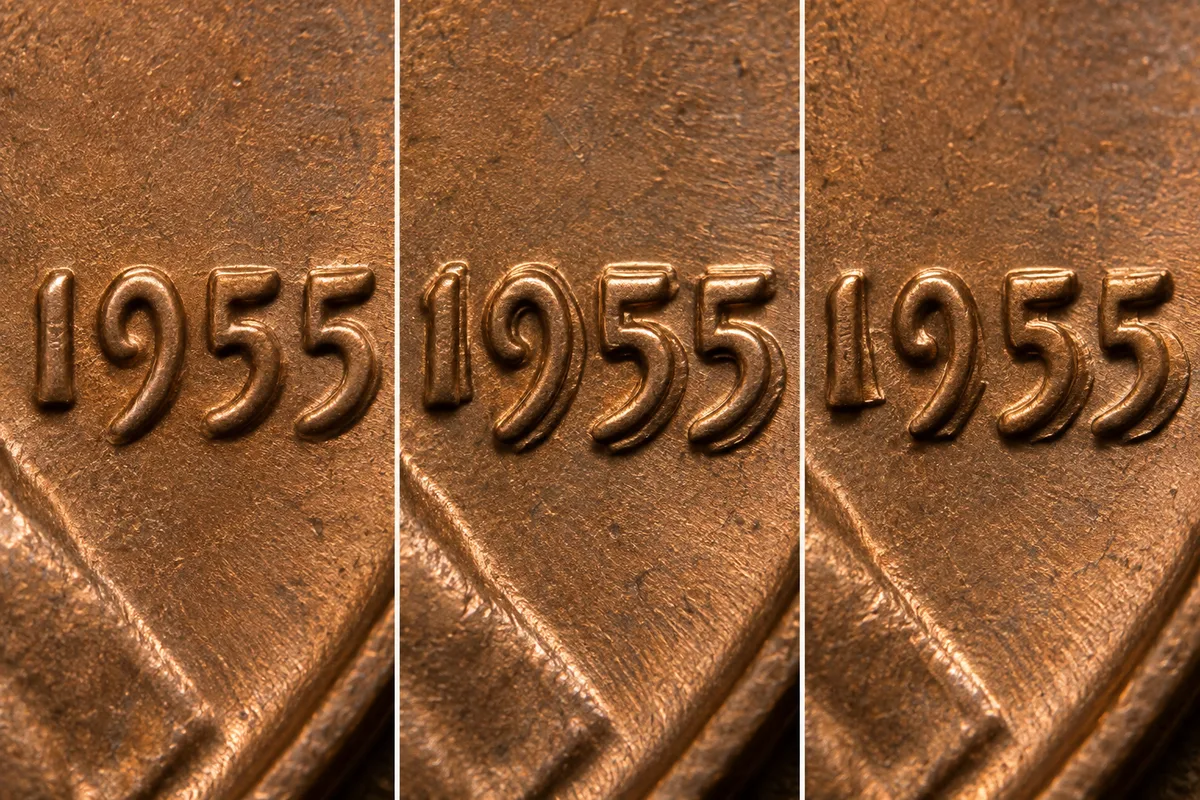
Eisenhower and Susan B. Anthony dollars
Some issues have different collector and circulation compositions. Check date, mintmark, edge, weight, and packaging before using a silver-value calculation.
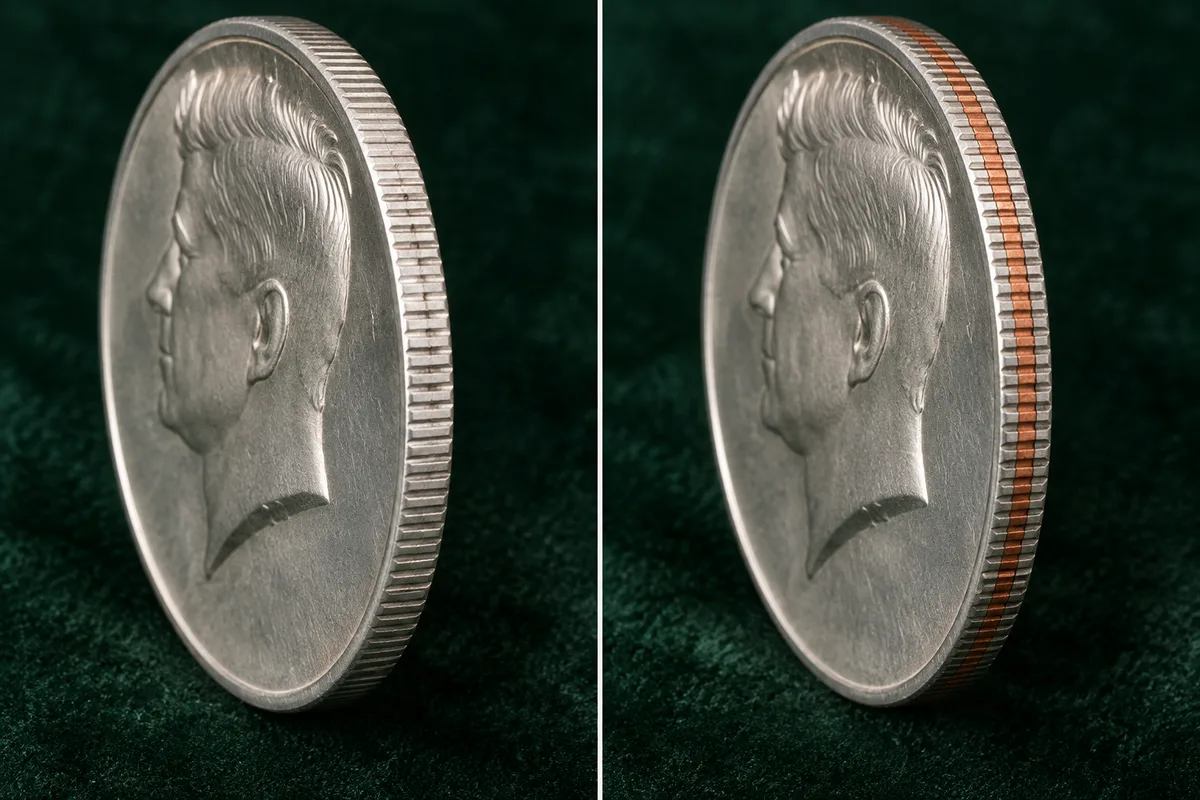
Sacagawea, Presidential, and Innovation dollars
Modern dollars may have edge lettering or distinct finishes by program. Compare orientation and presence of edge details with the correct issue before treating them as errors. Post-mint grinding and abrasion can remove lettering.
Trade and early dollars
Early dollars are heavily studied by die marriage and subtype. Authentication and reference matching are especially important before using a rare-variety name.
Older dollars: attribution precedes pricing
Early silver dollars and Morgan and Peace dollars have extensive die-marriage and die-state research. A raised crack, doubled detail, or unusual date may have a published attribution, but common die deterioration and contact marks can look impressive in one photograph. Match more than one marker to a specialist reference and check that the date, mint, and reverse type are correct.
Collector versions change the metal
Eisenhower dollars, modern dollars, proofs, and anniversary products can have different compositions and finishes. Do not infer silver from a bright surface or a set envelope. Record the product or issue and compare weight and edge with the correct Mint specifications. A precious-metal claim warrants independent confirmation when it would materially affect price.
Edge lettering is its own production step
The Mint explains that some dollars receive edge lettering after the faces are struck. A genuinely missing inscription can therefore occur without an off-center face strike. Photograph the entire edge in overlapping frames, including the seam between frames. Wear, grinding, and altered surfaces can remove or obscure letters; some issues intentionally have different edge treatments.
Design programs require exact comparison
Sacagawea, Presidential, Native American, and American Innovation dollars span changing reverses and inscriptions. Verify the issue name and date before searching for a “missing” design element. PCGS documents how edge-lettering errors entered the Presidential dollar series; that history should not be generalized to every dollar coin.
Reference reading and real specimens
Use these source photographs and specifications to check an actual coin. The AI illustrations on this page cannot authenticate a coin or show exact die markers.