U.S. COIN ERROR GUIDE
Errors on U.S. gold, bullion, and commemorative coins
A metal or mint-error claim on a high-value issue should start with authentication. Special finishes, edge treatments, and packaging can be normal for one issue and unusual for another.
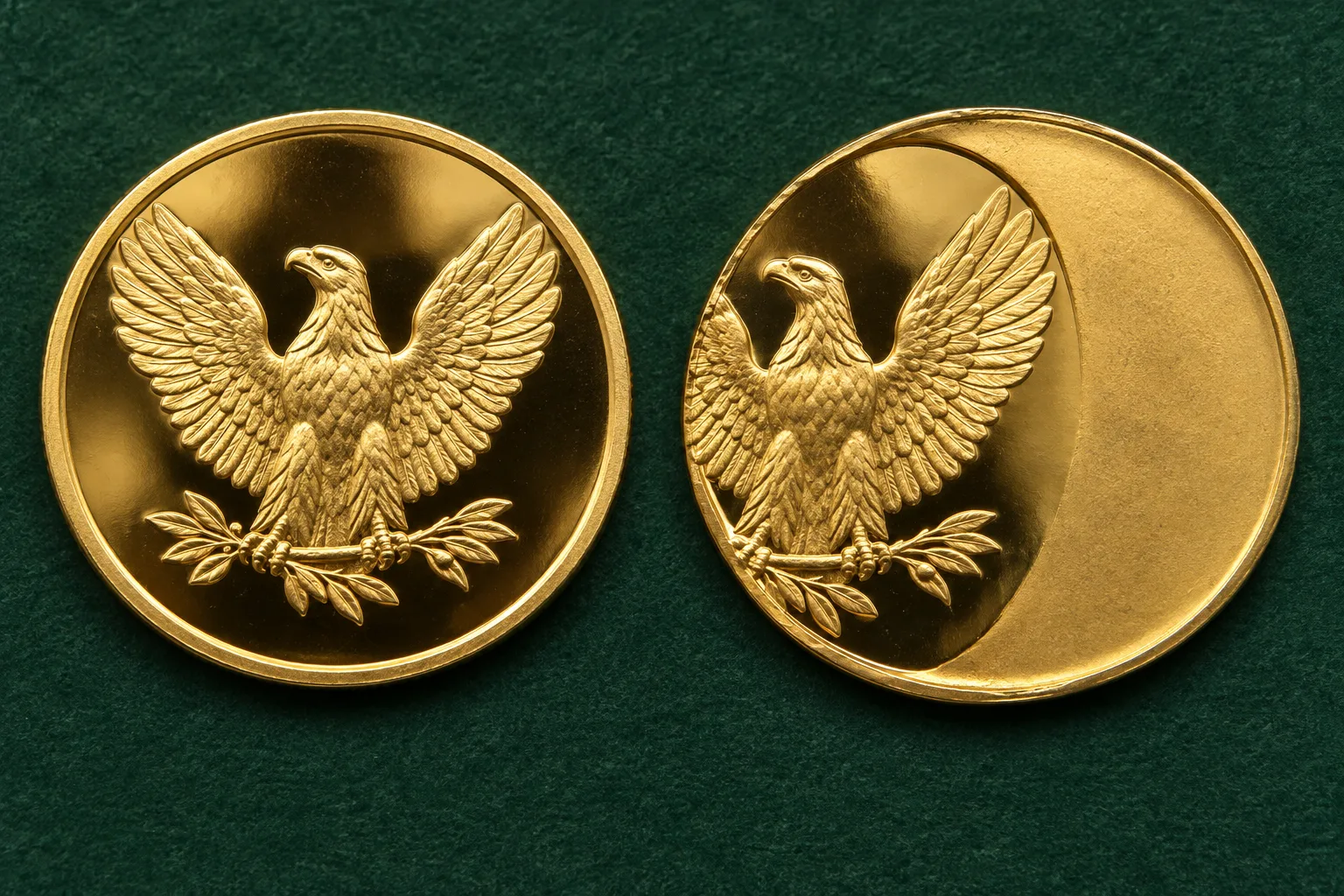
Gold denominations
Half eagles, eagles, double eagles, and smaller gold types have many date and die combinations. Record weight, dimensions, edge, and known diagnostics without cleaning or testing destructively.
Bullion and modern proofs
Compare the exact product specifications, finish, and mintmark. A matte, reverse-proof, burnished, or regular proof appearance may be intentional rather than an error.
Commemoratives
Check the issue name, year, mint, and authorized design. Extra or missing-looking details may be part of the commemorative artwork. Match the coin to official images before claiming a die defect.
Escalation
For a potentially valuable anomaly, use a qualified dealer or recognized grading service. A photo-based AI review is a prompt for closer inspection, not an authentication result.
Authentication before an error label
Gold and bullion coins have intrinsic value independent of a collector premium and are frequent targets for alteration and counterfeiting. Record mass, diameter, thickness, and edge without scratching or chemically testing the piece. Match the official product name and design to the specific year and mint. If basic specifications do not agree, pause the error claim and seek an authentication opinion.
Finishes are product features
Proof, reverse proof, burnished, uncirculated, and bullion finishes differ by issue. A frosted field or mirrored device may be normal on one product. Likewise, inscriptions and edge treatments may be deliberate. Compare official Mint images and descriptions before calling a finish inversion, missing mintmark, or edge difference an error.
Packaging and surface effects
Capsule scuffs, lint, haze, and fingerprints may appear to float over a coin in a single image. A struck-through feature is in the coin surface and has relief related to the strike. Move the light and camera, and inspect the edge of the apparent feature. Leave the coin in protective packaging when possible; cleaning or rubbing can erase evidence and reduce value.
How to support a premium
For a genuine anomaly, describe the exact mechanism and identify the authority that attributed it. Compare auction or dealer sales of the same type, denomination, issue, and condition. Broad “rare error” search results are weak comparables. A grading service or specialist can be worth the cost when the potential premium is substantial.
Reference reading and real specimens
Use these source photographs and specifications to check an actual coin. The AI illustration above cannot authenticate a coin or show an exact die marker.